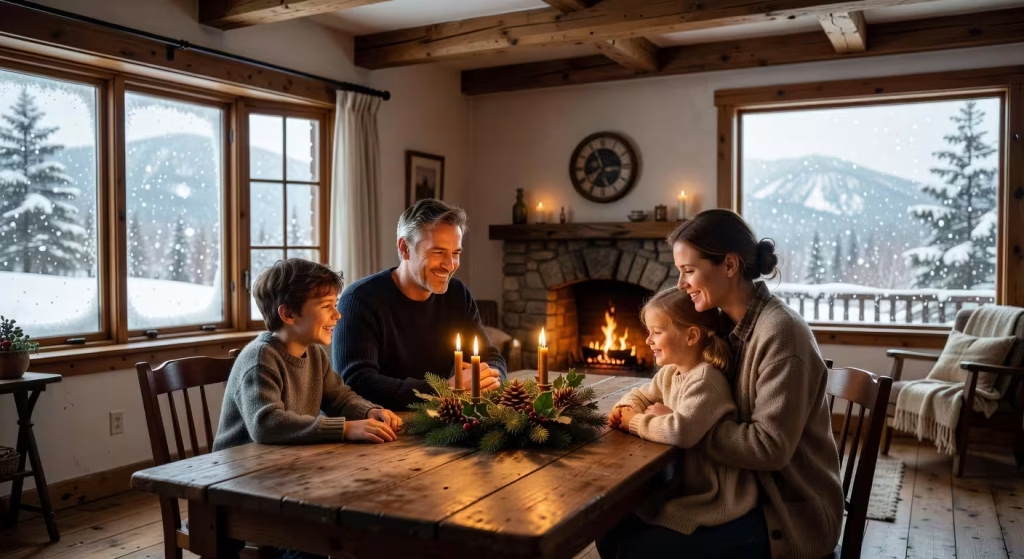
La neige tombe doucement derrière ma fenêtre du Midwest, le parfum de cannelle et de sapin emplissant l'air tandis que ma famille se rassemble autour de la table pour les lectures de l'Avent. C'est la magie que j'ai recherchée dans ma propre maison pendant des années—faire des fêtes chrétiennes bien plus que de simples dates sur un calendrier. En tant que femme au foyer traditionnelle qui a passé huit ans à partager des histoires dans notre communauté, j'ai appris que célébrer ces moments sacrés n'est pas une question de perfection. Il s'agit de tisser la foi, l'amour et de simples traditions dans le tissu de la vie de votre famille.
Le cœur de ces célébrations réside dans l'honneur de l'histoire du Christ tout en créant des souvenirs qui vous rapprochent. Que vous commenciez tout juste ou que vous affiniez des coutumes anciennes, ce guide s'inspire de vraies conversations qui surgissent dans notre communauté tradwife—des femmes partageant comment elles équilibrent l'agitation avec la réflexion silencieuse. Explorons comment rendre ces fêtes véritablement brillantes dans votre maison.
Pourquoi les célébrations en famille comptent dans votre parcours de foi
Noël et Pâques ne sont pas seulement des pauses dans la routine—ce sont des ancres qui nous rappellent les promesses de Dieu. Dans ma cuisine, entourée du bourdonnement de mon batteur KitchenAid qui fouette la pâte pour les petits pains de résurrection, j'ai été témoin de la façon dont ces moments renforcent nos liens. Les femmes dans épouse au foyer les cercles partagent souvent des histoires de se sentir submergées par les pressions commerciales, mais reprendre ces jours avec intention apporte une paix que les décorations achetées en magasin ne peuvent pas toucher.
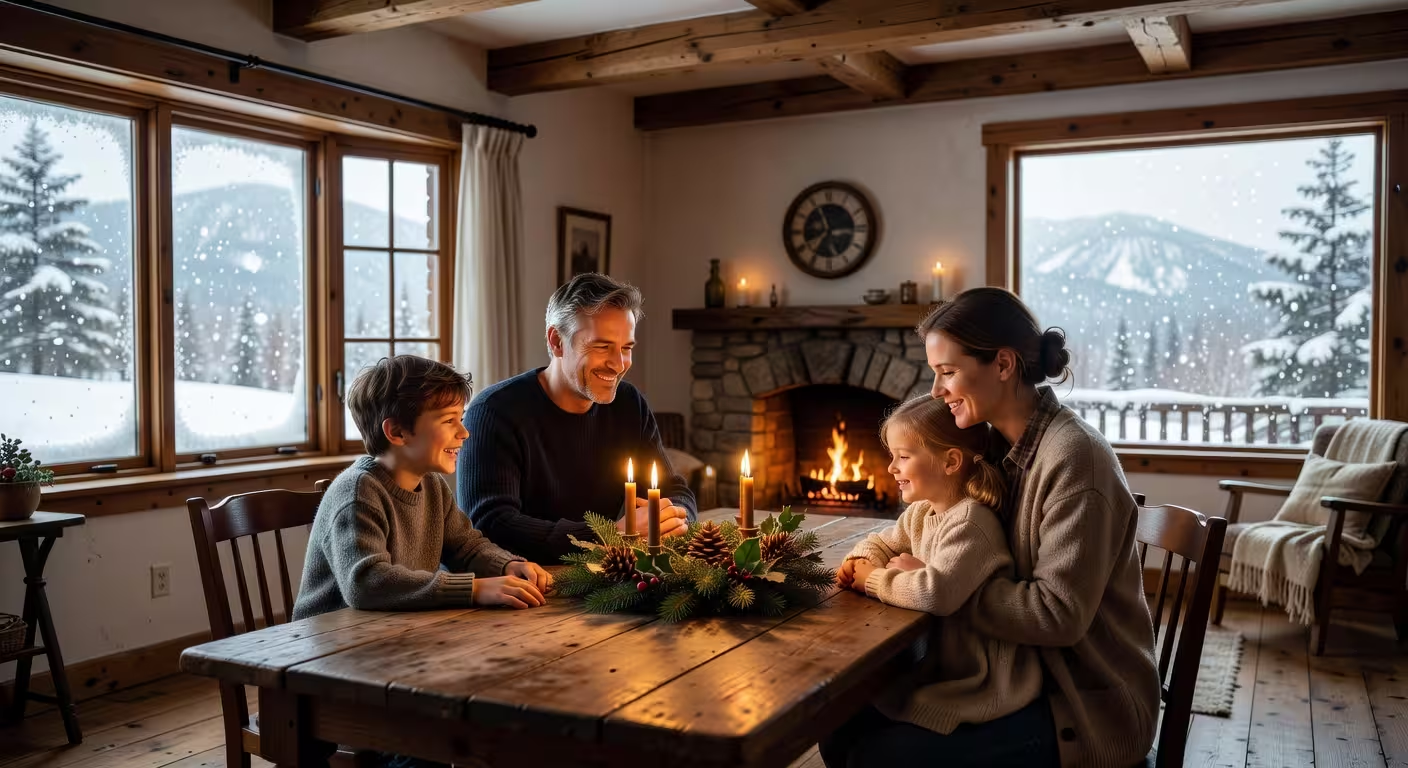
Dans le Pacifique Nord-Ouest, où les hivers pluvieux rendent les réunions en intérieur essentielles, les familles se tournent vers des couronnes de l'Avent faites maison en utilisant des conifères récoltés sur les sentiers locaux. Ce n'est pas spectaculaire, mais c'est authentique. Quand vous impliquez vos enfants dans ces rituels, vous plantez des graines de foi qui grandissent avec le temps.
Il est facile de se laisser prendre par les « devoirs »—des tables parfaites tirées des catalogues Pottery Barn ou des chasses aux œufs de Pâques élaborées. Mais j'ai appris que l'authenticité gagne toujours. Une histoire me reste particulièrement en mémoire : une jeune femme traditionnelle au Texas, jonglant entre ses jeunes enfants et le travail exigeant de son mari, a simplifié son Noël en se concentrant sur une seule dévotion familiale chaque soir. Ce n'était pas grandiose, mais cela a approfondi leur connexion à l'histoire de la Nativité.
La simplicité est la clé. Pour ceux qui commencent tout juste, ces célébrations parlent d'héritage—transmettre les valeurs du Midwest de gratitude lors des prières de Thanksgiving ou la joie tranquille du Carême dans un cadre de Nouvelle-Angleterre. Ces moments enseignent la résilience et la grâce, bien au-delà de toute photo de carte de vœux.
Construire des traditions qui durent : de l'Avent à Pâques
Avent : créer une anticipation sacrée
En commençant par l'Avent, cette belle saison d'anticipation, j'ai découvert que créer un rythme transforme l'attente en quelque chose de sacré. Dans ma maison, nous allumons des bougies chaque dimanche, lisant des passages de l'Écriture en sirotant du chocolat chaud—rien de compliqué, juste sincère. Des femmes authentiques partagent comment elles se débarrassent du stress en choisissant une seule activité significative par semaine, comme faire cuire des biscuits au pain d'épice en forme de crèches.

Adaptez vos traditions à l'énergie de votre famille. Pour Noël, nous incorporons l'hospitalité du Sud en invitant les voisins à chanter des cantiques, accompagnés d'un plat de cornbread cuit à la poêle en fonte. C'est chaleureux, accueillant, et renvoie à notre valeurs fondamentales sens de la communauté et de la connexion.
Carême : Embrasser un sacrifice significatif
En passant au Carême, le défi devient maintenir l'accent sur le sacrifice au milieu du chaos quotidien. Une histoire me marque particulièrement—une mère du Sud-Ouest qui a introduit les vendredis sans viande en utilisant son Instant Pot pour de simples ragoûts de haricots, transformant les repas en moments pédagogiques sur le chemin de Jésus vers la croix. Ce n'était pas une question de privation ; c'était une question de pleine conscience.
Envisagez de créer un coin de prière dans votre maison pendant cette saison. Une simple table avec une croix, une Bible et des bougies devient un rappel visuel du sacrifice du Christ. Cela ne nécessite pas d'articles coûteux—les boutiques d'occasion et vos propres fournitures artisanales fonctionnent magnifiquement.
Pâques : Célébrer l'espoir de la résurrection
Vient ensuite Pâques, avec sa promesse de renouveau. La teinture des œufs et le remplissage des paniers peuvent sembler commerciaux, mais les imprégner de foi change tout. Les femmes créent des jardins de résurrection avec de petites croix, plantent des graines comme symboles de nouvelle vie. En mode nettoyage de printemps, c'est un lien parfait pour rafraîchir à la fois la maison et l'esprit.

Entre vous et moi, la partie que la plupart des gens oublient est d'impliquer toute la famille dans la planification. Mon mari et moi en discutons autour d'un café, puisant dans notre dynamique de partenariat pour que tout le monde se sente inclus. Ce n'est pas rigide ; c'est flexible, s'adaptant aux saisons de la vie.
Moyens pratiques d'incorporer la foi dans les repas de fête
Les repas sont le cœur battant de toute célébration. Pour Thanksgiving, ce festin américain emblématique, j'ai remplacé le stress par la sérénité en préparant à l'avance avec ma cocotte néerlandaise pour la dinde cuite lentement. Étiqueter les plats avec des versets des Écritures transforme la table en un témoignage de gratitude, faisant écho aux rassemblements du 4 juillet où la gratitude coule à flots.
Il ne s'agit pas de gastronomie ; il s'agit d'intention. Pendant le repas de Noël, nous passons un bol de bénédiction, chaque personne partageant une prière. Une famille dans l'arrière-pays a dû affronter des enfants difficiles pendant le brunch de Pâques, alors ils ont introduit des aliments symboliques comme l'agneau pour le lien avec la Pâque, en provenance des marchés fermiers locaux. Cela a déclenché des conversations qui ont perduré bien après que les assiettes aient été desservies.
Incorporer l'esthétique vintage des années 1950 avec des ustensiles de cuisson Le Creuset ajoute du charme sans excès. Variez vos routines—pique-niques du Memorial Day en été avec des lectures dévotionnelles, ou cueillette de pommes en automne liée aux bénédictions de la moisson. Pour plus d'idées sur la création d'un espace de cuisine efficace pour ces célébrations, explorez les stratégies d'organisation de la cuisine qui soutiennent votre rythme de vie domestique.

Gardez les choses simples. Gardez-les sacrées. Des défis surgissent—comme les contraintes de temps pour les mamans qui travaillent de chez elles—mais l'adaptation avec une planification réfléchie maintient l'esprit. Ce que j'ai observé dans les conversations récentes, c'est une poussée vers l'équilibre, en veillant à ce que les repas nourrissent le corps et l'âme.
Créer des activités mémorables pour tous les âges
Impliquer tout le monde, des tout-petits aux adolescents, nécessite de la créativité et de l'intention. Pour Noël, nous voyons des familles créer des crèches à partir de matériaux recyclés, un clin d'œil à l'ingéniosité des femmes des grandes plaines. De mon expérience, ces projets pratiques, comme enfiler des guirlandes de pop-corn, favorisent l'union bien mieux que le temps d'écran.
Ne négligez pas les moments calmes. Les services du lever du soleil de Pâques, peut-être dans une prairie de la Nouvelle-Angleterre, suivis d'une promenade en famille, créent des impressions durables. Les femmes expriment leur frustration face aux enfants distraits, mais il existe de nombreux conseils pratiques : assignez des rôles, comme laisser les enfants plus âgés mener les prières ou les plus jeunes arranger les fleurs pour la table de Pâques.
L'une de mes adaptations préférées provient d'une famille du Sud qui a transformé le Carême en une « chaîne de bonté », ajoutant des maillons en papier pour chaque bonne action. C'est simple, visuel et s'inscrit dans des thèmes plus larges de rédemption. Pour des fêtes comme l'Épiphanie, préparer des galettes des rois avec des trésors cachés encourage les histoires sur les Rois Mages.

La variété le rend frais. Mélangez les saveurs régionales—des barbecues du Texas pour les rassemblements de la Pentecôte ou la cueillette de baies du Pacifique Nord-Ouest pour les festins d'été. L'objectif ? Des souvenirs qui résonnent avec la lumière éternelle de la foi. Si vous recherchez plus de recettes traditionnelles et d'idées de planification, vous trouverez une merveilleuse inspiration pour créer ces moments significatifs.
Surmonter les défis courants dans les observances de fêtes
Chaque femme au foyer traditionnelle connaît les obstacles : les contraintes budgétaires, la dynamique familiale, ou l'attrait des influences séculières. Les conversations récentes révèlent des femmes qui partagent des conseils précieux comme la brocante pour la décoration afin d'étirer le budget sans sacrifier le sens.
Voici la partie que la plupart des gens ignorent : aborder les baisses émotionnelles. Une femme qui commençait tout juste son parcours a partagé comment mélanger les traditions de son mari avec les siennes pendant Noël a atténué les tensions, créant un front uni. C'est une question de communication, ancrée dans ces rôles traditionnels que nous chérissons et les principes qui guident nos foyers.
La vérité ? L'imperfection est acceptable. Si la maladie dérange les plans, basculez vers des histoires au chevet des fêtes bibliques. Simplifiez sans culpabilité. Un Noël, j'étais alitée avec la grippe, alors nous avons écouté l'histoire de la Nativité en audio pendant que les enfants coloraient des pages de coloriage simples. Ce n'était pas ce que j'avais planifié, mais c'était beau à sa manière.
Quand la famille élargie ne partage pas vos convictions religieuses, concentrez-vous sur les points communs—gratitude, famille, amour. Vous pouvez honorer le Christ dans votre propre foyer sans créer de division. Un témoignage doux à travers votre joie et votre paix parle souvent plus fort que les paroles.
Résilience. C'est ce que ces défis construisent. En fin de compte, c'est l'amour versé dans ces efforts qui compte, transformant les jours ordinaires en jalons sacrés.
Le rendre vôtre : commencer cette année
En regardant vers votre prochaine célébration de vacances, rappelez-vous que vous n'avez pas besoin de mettre en œuvre tout d'un coup. Choisissez une ou deux traditions qui résonnent avec votre cœur et la saison de vie de votre famille. C'est peut-être allumer les bougies de l'Avent cette année. C'est peut-être ajouter un jardin de résurrection à Pâques prochain. Construisez lentement, intentionnellement.
La beauté de ces traditions, c'est qu'elles grandissent avec vous. Ce qui fonctionne avec les tout-petits évoluera à mesure que vos enfants grandiront. Ce qui semble significatif pendant vos années de jeunes mariés s'approfondira à mesure que votre mariage mûrit. Accordez-vous la grâce d'adapter, d'essayer de nouvelles choses, de lâcher prise sur ce qui ne sert pas le parcours de foi de votre famille.
J'aimerais beaucoup connaître les traditions que vous prévoyez de commencer ou de poursuivre cette année. Partagez vos histoires, vos questions et vos victoires avec d'autres femmes au foyer dans la Communauté du club Tradwife. Nous apprenons tous ensemble, nous nous soutenant mutuellement pour créer des foyers où la foi s'épanouit.
Foire Aux Questions
Comment commencer de simples traditions chrétiennes si je suis nouvelle à cela ?
Commencez par une ou deux activités qui correspondent à votre famille, comme une lecture hebdomadaire de l'Avent ou la préparation de gâteries de Pâques avec des significations symboliques. Concentrez-vous sur ce qui s'adapte au rythme de votre famille sans vous surcharger. La constance plutôt que la complexité crée des habitudes durables que vos enfants se souviendront pendant des années.
Et si ma famille n'adhère pas entièrement aux célébrations centrées sur la foi ?
Commencez modestement, en invitant la participation sans pression à travers des éléments amusants comme des bricolages ou des repas spéciaux. Montrez l'exemple par la joie et la paix. De nombreuses femmes partagent que leur enthousiasme et la chaleur de ces traditions attirent progressivement les autres, favorisant l'unité au fil du temps sans créer de conflits.
Comment puis-je éviter le consumérisme pendant Noël et Pâques ?
Mettez l'accent sur les cadeaux faits à la main et les activités centrées sur la foi comme les dévotionnels basés sur les Écritures ou le service communautaire. La friperie ou les projets de bricolage gardent l'accent sur le sens tout en respectant le budget. Établissez des attentes claires avec vos enfants sur le « pourquoi » derrière vos célébrations, et ils comprendront que les plus grands cadeaux ne se trouvent pas dans les magasins.
Y a-t-il des façons d'inclure la famille élargie dans ces traditions ?
Organisez des réunions avec des responsabilités partagées, comme des repas-partage liés aux thèmes des fêtes, pour favoriser l'inclusion. Pour les parents éloignés, envisagez des options virtuelles comme des prières partagées lors d'appels vidéo ou en leur envoyant les matériels de dévotion que vous utilisez. Cela crée une connexion à travers les distances tout en gardant le Christ au centre.
Comment équilibrer la préparation des fêtes avec les tâches quotidiennes du foyer ?
Planifiez à l'avance avec la cuisson en vrac ou des menus simplifiés, en intégrant la préparation à votre rythme hebdomadaire. Déléguez les tâches aux membres de la famille, transformant les corvées en occasions de rapprochement. Rappelez-vous qu'une maison légèrement désordonnée avec un esprit paisible vaut mieux qu'une maison parfaite avec une mère stressée.
Et si notre budget est limité pour les célébrations des fêtes ?
Les traditions les plus significatives coûtent peu ou rien—lire l'Écriture ensemble, faire des promenades dans la nature pour recueillir de la verdure, faire cuire de simples friandises ou servir les autres. Concentrez-vous sur les expériences plutôt que sur les choses. Les magasins d'occasion, les magasins à prix unique et votre propre créativité peuvent vous fournir tout ce dont vous avez besoin pour créer de belles célébrations remplies de foi sans stress financier.
Pour aller plus loin : Pour plus de contexte, voir Fêtes chrétiennes sur Wikipedia pour des informations générales sur les fêtes chrétiennes et leurs significations.