The Tradwife Movement
History, Values & Why It’s Growing
Millions of women around the world are choosing tradition over trend. This is the story of how a quiet lifestyle became a movement — and why it is only getting stronger.
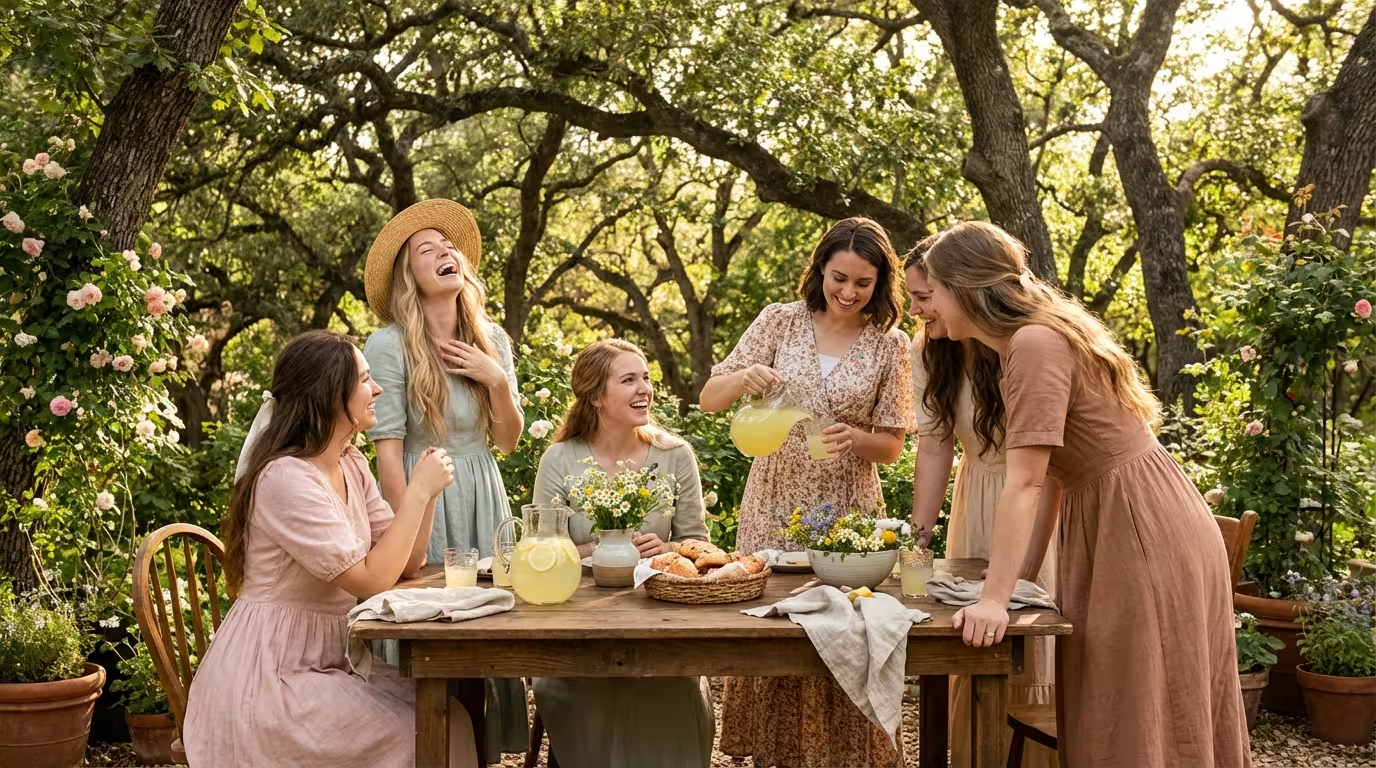
What Is the Tradwife Movement?
The tradwife movement is a growing cultural shift in which women — and the families who support them — are openly choosing and celebrating the traditional lifestyle of homemaking, motherhood, and family-centered living.
It is not an organization. There is no leader, no manifesto, no membership card. The tradwife movement is something more organic than that — it is what happens when millions of women, independently and across different countries, arrive at the same realization: that the life they were told to want does not feel like enough. And that the life their grandmothers lived — centered on home, family, and love — might actually be the one worth fighting for.
At its center is the tradwife — a woman who voluntarily embraces traditional gender roles, finding purpose in homemaking, raising her children with intention, and building a life alongside her tradhusband. But the movement is bigger than any one woman. It includes husbands who provide and protect, children being raised with values, and entire communities of families who support each other in living counter-culturally — in a world that often does not understand their choices and sometimes actively mocks them.
The tradwife movement is not about going backwards. It is about going deeper — deeper into what matters, deeper into relationship, deeper into the kind of life that cannot be measured by a job title but can be measured by the faces around your dinner table and the love that holds them there.
A Brief History of the Tradwife Movement
The tradwife lifestyle has existed for as long as families have. But the modern movement that gave it a name, a community, and a voice has a more specific story — and it moved faster than anyone expected.
| Era | What happened |
|---|---|
| Before 2015 | Women living traditional lifestyles existed everywhere, but quietly. Homemaking blogs were growing — sites about from-scratch cooking, homeschooling, and intentional domesticity — but they did not share a name or an identity. They were scattered dots on a map that had not yet been connected. |
| 2015–2017 | The term “tradwife” appeared in online forums and relationship communities. It started as shorthand — a signal to other women who shared the same values. Early adopters found each other on Reddit, Tumblr, and small Facebook groups. The word stuck because it was searchable, hashtaggable, and impossible to misunderstand. |
| 2018–2019 | Mainstream media discovered the tradwife. The BBC published a documentary segment. The New York Times ran profiles. Alena Kate Pettitt in the UK became one of the first public faces of the movement, openly writing and speaking about her choice to embrace traditional femininity. Reactions were split — fascination, admiration, and fierce criticism all at once. But the conversation had started, and it was not going away. |
| 2020–2021 | The pandemic changed everything. Millions of families were forced to stay home — and many of them discovered they loved the slower pace. Baking sourdough became a worldwide phenomenon. Parents realized they enjoyed being with their children all day. Women who had been on the fence about leaving their jobs suddenly had proof of concept: this life works. And it feels better than what we had before. |
| 2022–2023 | TikTok became the movement’s engine. Creators like Nara Smith, Estee Williams, and Hannah Neeleman (Ballerina Farm) brought tradwife content to audiences of millions — each with a different flavor but the same core message: there is beauty and purpose in the domestic life. The hashtag #tradwife crossed four billion views. What had been a niche identity became a mainstream cultural conversation. |
| 2024–present | The movement matured beyond social media. Dedicated communities like Tradwife Club emerged — spaces that do not depend on algorithms or platforms that might shadow-ban traditional content. The conversation expanded to include tradhusbands, singles exploring traditional values, and families looking for something deeper than what mainstream culture offers. The tradwife movement is no longer a trend. It is a lifestyle with roots — and those roots are spreading. |

Social Media & the Tradwife Trend
You probably first heard the word “tradwife” because of a video that stopped your scroll. Maybe it was a woman in a farmhouse kitchen pulling fresh bread from the oven in slow motion. Maybe it was a mother calmly reading aloud to three children while rain hit the windows. Maybe it was someone planting a garden in a linen dress and you thought: I want my life to feel like that.
That is how the tradwife trend spread — not through marketing, but through longing. TikTok’s algorithm does not care about follower counts. It cares about watch time. And people could not stop watching tradwife content. The quiet, the beauty, the intention — it was the opposite of everything else on the platform, and that contrast was magnetic.
Nara Smith became one of the most-watched creators in the space — her calm, meticulous from-scratch cooking videos amassing tens of millions of views. Hannah Neeleman, the former ballerina raising eight children on a farm, turned Ballerina Farm into both a brand and a window into large-family homestead life. Estee Williams brought British tradwife charm to a global audience. Each had a different style, but the core was the same: real women, real homes, real routines, no pretense.
Instagram became the movement’s mood board — feminine fashion, cottage kitchens, flat lays of homemade meals, family moments captured in golden hour. YouTube offered depth: full day-in-my-life vlogs, homeschool routines, honest conversations about faith, finances, and the real cost of choosing this path.
The women leading these conversations did not set out to become influencers. They just filmed their Tuesday — and millions of women watched and realized that their own Tuesday could look like that too. For a curated list of who to follow, see our tradwife influencers guide.

Why the Tradwife Movement Keeps Growing
The simple answer is: because modern life made a promise it could not keep.
A generation of women was told that fulfillment lived on the other side of a career — that the corner office, the title on the business card, the financial independence would be enough. Many of them got all of it. And then they sat in the parking lot of the daycare at 6pm, watching through the window as someone else fed their child dinner, and felt a crack open inside them that no performance review could fill.
That crack is where the tradwife movement lives. Not in ideology. Not in politics. In the gap between what women were promised and what they actually experienced.
The pandemic made the crack impossible to ignore. When the offices closed and families were forced together, something unexpected happened: many women discovered they were happier. Happier baking bread with their children than answering emails. Happier eating breakfast with their husband than commuting. Happier in the garden than in the conference room. The world told them this was temporary. Many of them decided it was not.
At the same time, social media created something that had never existed before: visibility. A woman in rural Tennessee and a woman in suburban London could see each other’s kitchens, each other’s routines, each other’s choices — and feel, for the first time, that they were not alone. That feeling — there are others like me — is the fuel that turned a scattered lifestyle into a global movement.
But underneath the sourdough and the linen aprons, the reason is even simpler than all of that. The movement keeps growing because women want to be with their children. They want to cook real food and eat it together. They want a marriage that feels like a partnership instead of a competition. They want a home that feels like a sanctuary instead of a staging area between obligations. And they are tired of pretending they do not want these things.
The tradwife movement is not a reaction against anything. It is a return to something — something that was always there, waiting for women brave enough to choose it out loud.
The Values Behind the Movement
No one signs a contract to join the tradwife movement. There is no checklist and no test. But when you listen to the women inside it long enough, certain convictions emerge — not as rules, but as the shared ground that holds the community together.
Family as the highest calling
Not a fallback. Not a consolation prize for women who “could not make it” elsewhere. The single most important, most challenging, most consequential work a human being can do. The tradwife and tradhusband both believe this — not in theory, but in practice, every day, with their time and their energy and their money.
Intentionality over convenience
Cooking from scratch instead of ordering delivery. Reading aloud instead of handing over a screen. Tending a garden instead of buying everything packaged. The movement celebrates choosing the harder, slower, more intentional path — not out of masochism, but because the women who have done both will tell you: the slow way tastes better, feels better, and builds something that lasts.
Complementary partnership
The belief that men and women bring different strengths to a family, and that a home runs best when both partners commit fully to their roles — not competing for the same tasks, but completing each other like two hands building the same house. Explore this in our marriage section.
Faith and moral grounding
For many in the movement, faith is the anchor — the thing that makes Monday’s laundry meaningful and Wednesday’s bread baking feel like an act of worship. Not everyone shares the same faith. Not everyone is religious. But most have planted their life in soil that goes deeper than personal preference.
Heritage and legacy
Your grandmother’s recipe, passed down in her handwriting. The quilt your aunt made for your wedding. The song your mother sang to you that you now sing to your daughter. The movement is deeply connected to the idea that some things are not meant to be updated — they are meant to be preserved, practiced, and passed on. For reading that deepens this conviction, see our curated book list.
Criticism of the Tradwife Movement — And the Real Conversation
No movement grows this fast without pushback — and some of that pushback deserves a real answer, not a dismissal.
“It romanticizes an era that was not good for women.” This is the most common critique, and it is partly fair. Some tradwife content on social media does lean into a rose-tinted 1950s fantasy that glosses over the real limitations women faced in that era — no financial independence, no legal protections, no choice. The movement’s honest response: a modern tradwife is not a 1950s housewife. She has a degree, a bank account, legal rights, and a smartphone. She is not trapped. She chose this. The values are timeless; the context is modern. Any content that pretends otherwise is selling a costume, not a lifestyle.
“It pressures women to stay home.” If the movement pressures anyone into a specific role, it has failed its own principles. The heart of the tradwife identity is voluntary choice. A woman who stays home because she feels trapped is not living the tradwife lifestyle — she is living in a cage. This community celebrates choice — and that means respecting the woman who chooses a career just as much as the one who chooses the kitchen. What it asks in return is the same respect flowing the other direction.
“The aesthetic is unrealistic.” Some of it is. The perfectly lit kitchen, the immaculate children, the woman who somehow bakes bread in a white dress without getting flour on it — that is content, not reality. Real homemaking includes burnt dinners, screaming toddlers, and days when the laundry mountain wins. The best voices in the community — the influencers people actually trust — are the ones who show both. The tradwife aesthetic is beautiful. But beauty and honesty have to live in the same house, or the whole thing collapses.
“It excludes people who don’t fit the mold.” The tradwife movement has been perceived as predominantly white, Christian, and upper-middle-class — and early content did skew that way. But the reality is more diverse than the stereotypes suggest. Traditional family values exist in every culture, every ethnicity, every income level. There are Black tradwives, Latina tradwives, Muslim tradwives, secular tradwives, tradwives in studio apartments and tradwives on homesteads. Communities like Tradwife Club are working to make that diversity visible and that welcome explicit — because if the values are universal, the community must be too.
Criticism, when it is honest, makes a movement stronger. The tradwife community is at its best when it listens, reflects, and keeps the focus where it belongs: on building families with love, intention, and the humility to admit that no one gets it right every day.
Stories From the Movement — In Your Inbox
Real families, real routines, real encouragement. Every Monday.
Where Is the Tradwife Movement Headed?
The tradwife movement has already outgrown the “trend” label. Trends fade when the algorithm moves on. This has not faded — it has deepened. Here is where it is going.
From screens to kitchen tables. What started online is moving into real life. Local meetup groups are forming in cities and towns across the US, UK, Australia, and Europe. Homemaking workshops, sourdough classes, faith-based family retreats, and informal neighborhood gatherings are replacing the scroll. Women are putting down their phones and picking up each other’s children. That transition — from virtual community to physical community — is what turns a movement into a culture.
From creators to infrastructure. The movement is building its own platforms instead of depending on algorithms that can suppress traditional content without warning. Tradwife Club is one example — a dedicated community that belongs to the families who use it, not to a tech company that might change the rules tomorrow. Expect more books, more podcasts, more courses, more resources built by traditional families for traditional families.
From women to whole families. The early tradwife conversation was mostly about her. Now it is expanding. Tradhusbands are finding their voice. Singles are exploring traditional values within the community. Children raised in tradwife homes are growing up and starting families of their own. The movement is becoming what it was always meant to be: not a women’s movement, but a family movement.
From lifestyle to legacy. The real test of this movement is not whether it goes viral. It is whether the families it builds are strong enough to endure — through recessions, through cultural shifts, through the ordinary Tuesday afternoons when no one is watching and the only audience is a toddler who needs his lunch. The first generation of tradwife families is still young. Ask again in twenty years. If their children come home for Thanksgiving and bring their own families — that is when we will know it worked.
How to Become Part of the Tradwife Movement
You do not need anyone’s permission. If these values resonate with you — even quietly, even uncertainly — you are already closer than you think.
Start in your own kitchen — tonight
The movement is not about declaring an identity on social media. It is about making daily choices. Cook a meal from scratch tonight — even if it is just scrambled eggs with toast you actually buttered and herbs you actually chopped. Sit at the table with your family. Put your phone in another room. That is the movement. Everything else is just scale. For a practical framework, read our tradwife rules and lifestyle guide.
Learn from the women who went first
Follow the tradwife influencers whose lives look achievable — not perfect, but intentional. Watch how they organize their mornings, what they cook on a Wednesday, how they handle a bad day. Read the books that shaped them. Explore the tradwife aesthetic and find the version that feels like you — not a costume, but a mirror.
Bring your husband into the conversation
If you are married or in a relationship, this is a path you walk as a team. Share what you are feeling. Read the tradhusband guide together. Talk about what your family would look like if you both went all in on the tradwife lifestyle — the finances, the roles, the daily rhythms. Dream about it together. Then start building it.
Find your people — because the world will not always understand
There will be a dinner party where someone asks “so what do you do?” and you say “I stay home with my kids” and the conversation dies. There will be a relative who thinks you are wasting your degree. There will be a morning when you are exhausted and alone and scrolling through LinkedIn wondering if you made a mistake. On those days, you need women who know exactly how that feels — and who will remind you, with their own messy kitchens and their own tired smiles, that you did not make a mistake. You made a choice. And it is a beautiful one. Tradwife Club exists for those days. And for the golden ones too.
Tradwife Movement FAQ
What is the tradwife movement?
A growing cultural shift in which women and families openly choose and celebrate the traditional lifestyle — homemaking, intentional motherhood, complementary marriage, and family-centered living. Not an organization — a shared conviction.
When did the tradwife trend start?
The term emerged online around 2015–2017 and entered mainstream media by 2018. The lifestyle is ancient — the modern movement gave it a name, a hashtag, and a community.
Is the tradwife movement political?
For most women in the community, it is deeply personal — not political. It includes people across the entire political spectrum who share one thing: the belief that family is the most important thing they will ever build.
Is it only for women?
No. The movement increasingly includes tradhusbands, entire families, and singles exploring traditional values within the community. It started as a women’s conversation. It is becoming a family conversation.
Is it only for religious people?
No. Faith is important to many in the movement, but the community welcomes people of all backgrounds. The shared foundation is values and intentional living — not a specific denomination.
Who are the most well-known tradwife influencers?
Creators like Nara Smith, Hannah Neeleman (Ballerina Farm), Estee Williams, and many others have brought tradwife content to millions. See our full tradwife influencers guide for who to follow and why.
Why is the tradwife movement growing so fast?
Burnout from hustle culture. The pandemic’s forced slowdown. Social media giving visibility to an invisible lifestyle. And a deep, human desire for connection, meaning, and a life that feels like it belongs to you — not to your employer.
How can I be part of the movement?
Start living the tradwife values in your own home — today. Then find your community. Tradwife Club exists because no one should have to build this life alone.
You Might Also Love
What Is a Tradwife?
The complete guide that started it all — meaning, lifestyle, and how to begin
What Is a Tradhusband?
The man on the other side of the equation
Tradwife Influencers
The women who filmed their Tuesday — and changed millions of lives
Tradwife Aesthetic
The visual language of the movement — fashion, home, and beauty
Tradwife Books
The reading that shapes how you think about home and family
This Movement Has a Home. So Do You.
Thousands of families chose tradition — and then they found each other here. Your seat at the table has been waiting.