What is a Tradwife? Meaning, Definition & the Traditional Wife Lifestyle

Complete Guide

What Is a Tradwife?
Meaning, Definition & Lifestyle

Everything you need to know about the tradwife lifestyle — from what it really means and where it comes from, to what daily life looks like, the values behind it, and how to take your first steps.

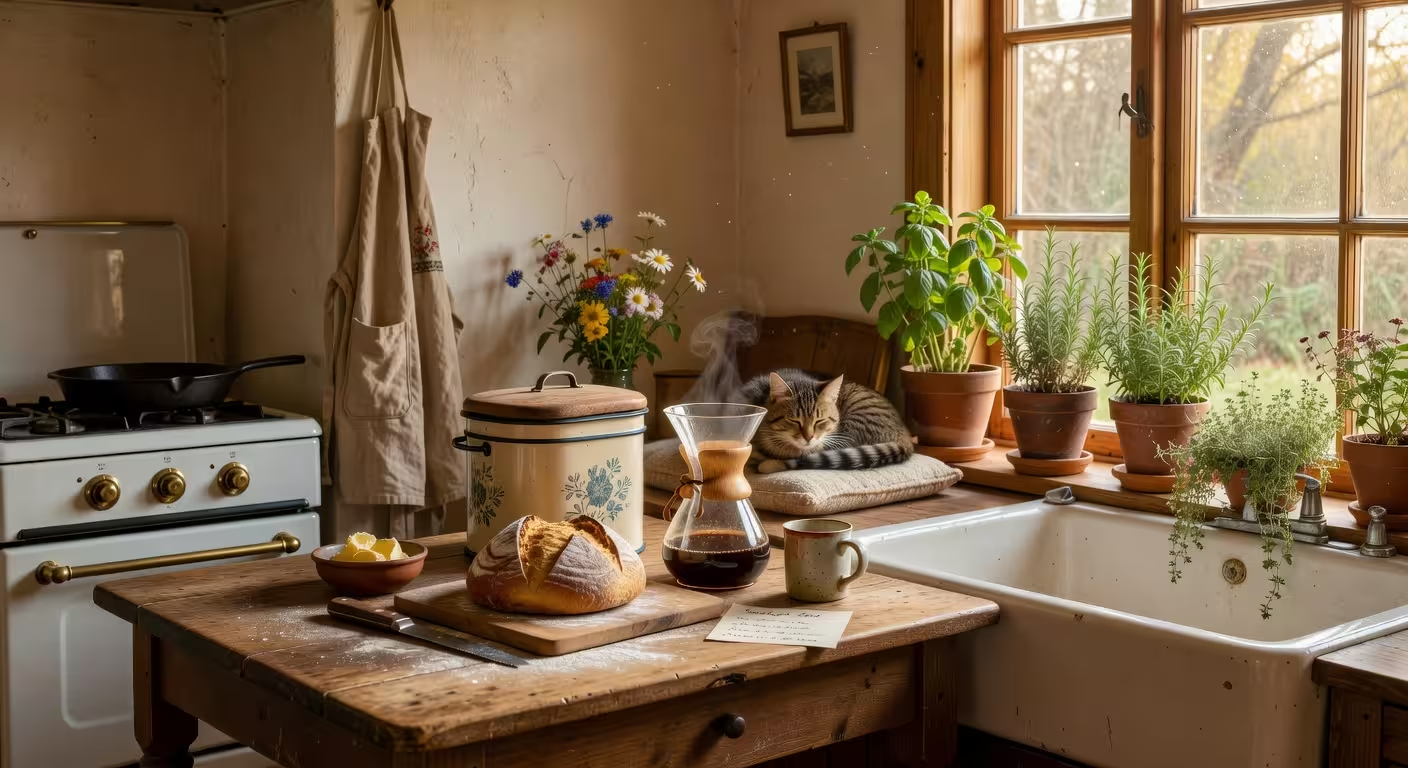
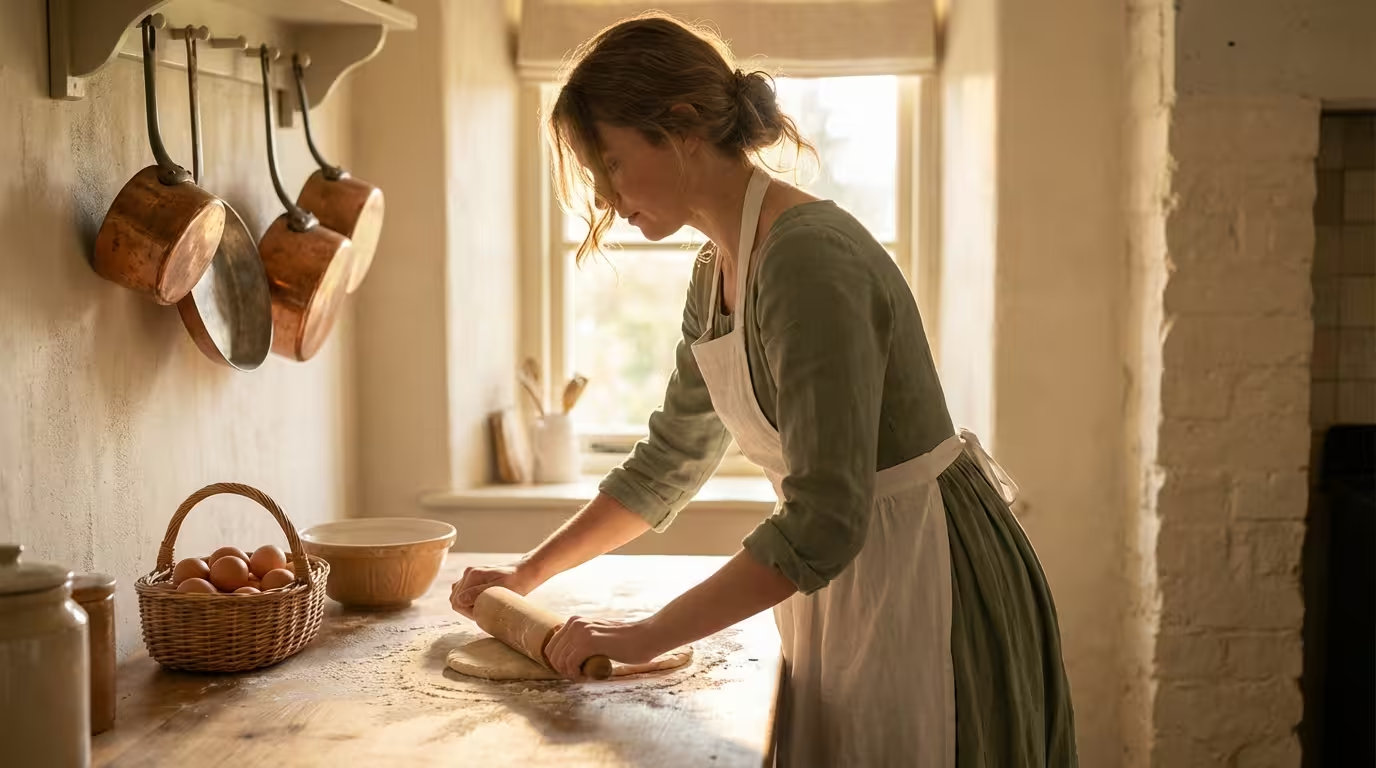
Traditional wife in a sunlit cottage kitchen embodying the tradwife lifestyle

The definition

What Does Tradwife Mean?

Definition

Tradwife (noun) — A woman who voluntarily embraces traditional gender roles, prioritizing homemaking, raising children, and supporting her husband as the central pillars of a purposeful, fulfilling life. Short for traditional wife.

At its heart, being a tradwife means believing that the home is a place worthy of a woman’s full intelligence, creativity, and devotion. It means waking up each morning with the understanding that the meals you cook, the children you raise, the space you tend, and the marriage you nurture are not small things — they are the most important things.

A tradwife cooks meals from scratch because she wants her family nourished with real food made with care. She keeps her home organized and beautiful because she knows a peaceful environment shapes how everyone in the family feels. She is present with her children — reading to them, teaching them, listening to them — because she understands that no one can replace a mother’s steady, loving attention. And she invests in her marriage because she sees her husband not as an adversary but as a partner in the shared project of building a good life.

This is not about performing a role. It is about living with intention. A tradwife is a woman who has looked at all the options modern life offers and has chosen — freely, consciously, and often courageously — the path that feels truest to who she is.

The term gained mainstream visibility through social media, particularly TikTok and Instagram, where women began sharing their daily routines — baking sourdough, gardening, homeschooling, styling vintage-inspired outfits — and found an audience of millions who recognized their own longings reflected back at them. What started as a hashtag became a worldwide community. If you want to explore every term used in this space, visit our complete glossary.

Pronunciation:
/trăd-wīf/
— rhymes with “glad life”

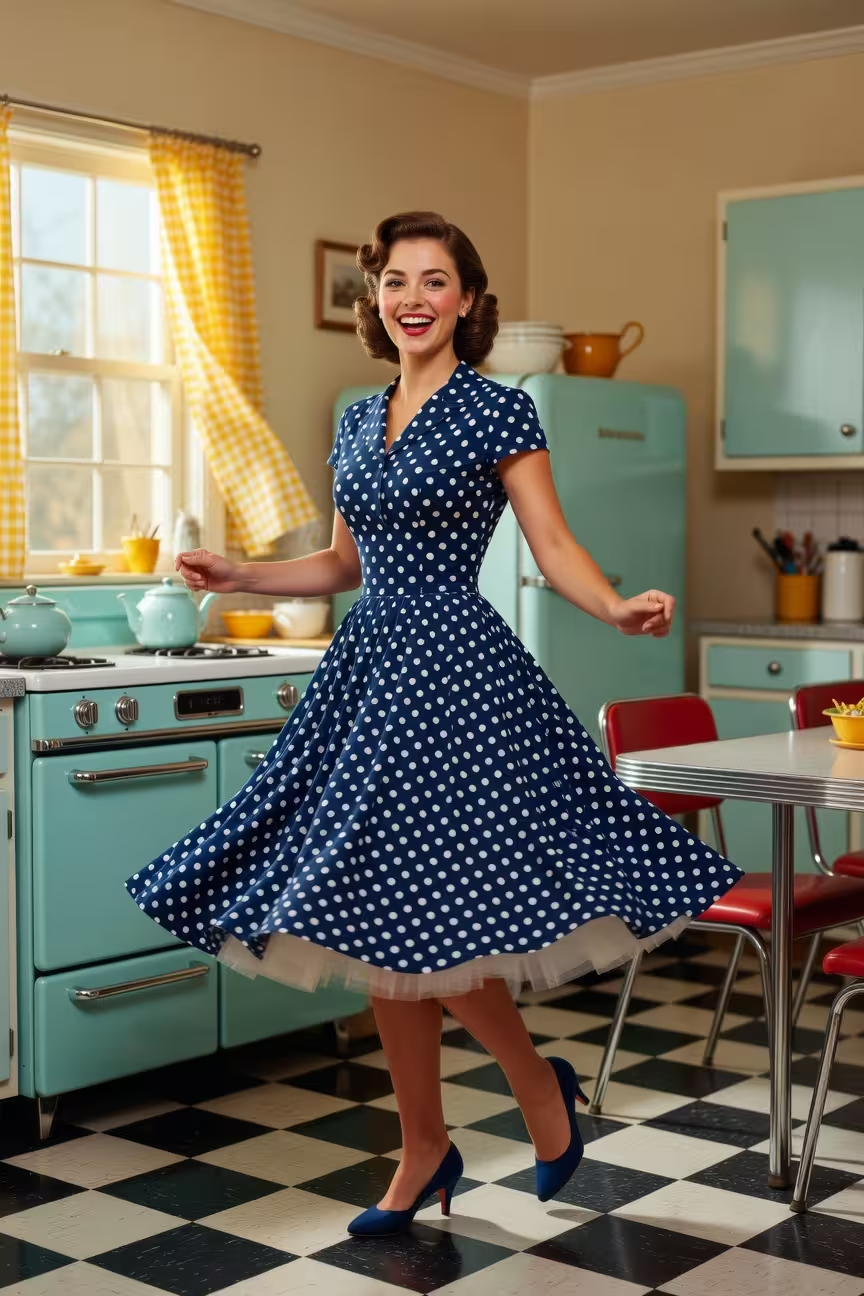
Split view showing a 1950s homemaker and a modern traditional wife representing the tradwife movement evolution
The origin story

Where Does the Term Tradwife Come From?

The word “tradwife” first appeared in online forums during the mid-2010s. Women who had quietly been living traditional lifestyles — some for years, some just starting — began using the term as shorthand for an identity that did not have a name before. It combined “traditional” and “wife” into something searchable, shareable, and impossible to misunderstand.

By 2018, the mainstream media noticed. The BBC ran features. The New York Times published profiles. What surprised journalists was not that these women existed — it was that they were young, educated, articulate, and completely unapologetic. They had master’s degrees and sourdough starters. They could quote both Scripture and spreadsheet formulas. And they had chosen the kitchen over the cubicle with their eyes wide open.

But the lifestyle itself is as old as families are. What is new is not the choice — it is the community. Modern women found each other online, gave their shared values a name, and built something visible enough that no one could dismiss it as a fringe curiosity anymore.

The tradwife movement has grown rapidly since then — driven by social media, a deep yearning for meaning beyond career titles, and a generation of women who watched their own mothers try to do everything and wondered if there might be another way.

A day in the life

What Does a Tradwife Actually Do?

Here is what an average Tuesday might look like. Not a perfect day — a real one.

You wake up before the kids do. The house is quiet and the coffee is dripping. You sit with your devotional or your journal for fifteen minutes — the only fifteen minutes today that will be completely yours. You write your grocery list while the oatmeal cooks.

By eight, the kitchen is alive. Breakfast is on the table — nothing Instagram-worthy, just oatmeal with honey and sliced banana, because it is Tuesday and Tuesday is oatmeal. Your husband kisses you goodbye. The toddler dumps his bowl. The four-year-old wants to help clean it up, which means you will be mopping the floor again in twenty minutes, but you let her help anyway because you are raising a person, not maintaining a showroom.

The morning is homemaking: two loads of laundry, bathrooms wiped down, the living room put back together after yesterday’s fort. You move through the house the way you have learned to — not perfectly, but systematically. You have a rhythm now. Monday is meal planning, Tuesday is deep clean, Wednesday is baking day. It took two years to build this rhythm. It saves your sanity.

Lunch is leftovers from last night’s roast chicken turned into soup with whatever vegetables needed using. After lunch, the kids nap — or, if they are older, they read. You use the quiet to prep dinner, fold laundry while listening to a podcast about marriage, or work on the mending pile you have been ignoring since February.

The afternoon is theirs. Reading aloud on the couch. Sidewalk chalk. A walk to the park where you talk to the neighbor whose husband just lost his job and you promise to bring dinner tomorrow. Parenting is not just what happens inside your house. It is what your children see you do for other people.

Your husband comes home to a set table and something that smells good. Dinner is not a production — it is roasted vegetables, bread you baked yesterday, and a salad. You eat together. The kids fight over who gets the heel of the bread. You and your husband catch each other’s eyes across the table and share a look that says: this is it. This is the whole thing.

After bedtime stories and prayers, the house goes quiet again. You tidy the kitchen, start the dishwasher, and maybe sit with your sewing or a chapter of the book you are reading. You do not scroll. You rest.

It is not glamorous. It is not effortless. But it is deeply, unmistakably yours — and you would not trade it for any corner office in the world.

The framework

What a Tradwife’s Week Looks Like

The “day in the life” above is one slice. Here is the full week. Most tradwives develop a rhythm like this over time — not rigid, but structured enough that the important things never fall through the cracks.

Day Focus What this actually looks like
Monday Reset & plan Meal plan the week (with what is already in the fridge), grocery list, laundry marathon, quick whole-house tidy
Tuesday Deep clean Bathrooms, floors, kitchen surfaces, change all bed linens. The one day that feels like real work — because it is
Wednesday Baking & cooking Bread baking, batch cooking two or three freezer meals, restocking the pantry, maybe a new recipe you have been wanting to try
Thursday Children & learning Focused homeschool or activities, library trip, nature walk, art or craft project. The day you pour into them without distraction
Friday Home projects Mending, seasonal decor swap, garden work, organizing one drawer or closet. Small improvements that compound over months
Saturday Family day Farmer’s market, family outing, husband date, or just a slow morning with pancakes and no agenda
Sunday Rest & worship Church or worship, a family meal that takes all afternoon, rest, reflection, previewing the week ahead

This is not a schedule you download and follow on day one. It is something you build, week by week, adjusting to your family’s reality. For a deeper framework, read our Tradwife Rules — a complete practical lifestyle guide.

Key differences

Tradwife vs Housewife vs Stay-at-Home Mom

People use these words interchangeably, but they describe different things. If you have ever wondered “am I a tradwife, or just a stay-at-home mom?” — this table will clarify it.

Tradwife Housewife Stay-at-Home Mom
What it means Intentionally embraces traditional gender roles as a lifestyle and identity Manages the household instead of working outside the home Stays home primarily to care for children
Why she does it Values-driven: tradition, faith, femininity, family-first philosophy Could be practical, preferential, or circumstantial Usually child-focused; may plan to return to work
View of marriage Complementary roles — husband provides, wife builds the home Varies — no specific philosophy required Varies
Style Often intentional — feminine, modest, vintage-inspired No specific aesthetic No specific aesthetic
Community Active in tradwife spaces, shares lifestyle online or locally May or may not seek community Often connected through parenting groups
How she sees it “This is who I am” “This is what I do” “This is what I do right now”

The difference lives in the last row. A tradwife is not just at home — she has built her whole worldview around the conviction that being at home matters. That is the line between a situation and an identity.

How women found each other

Tradwife on TikTok, Instagram & YouTube

You probably found out what a tradwife is because of social media. Maybe a TikTok video of a woman in a linen apron pulling sourdough from the oven stopped your scroll at 11pm. Maybe an Instagram reel of a mother reading to her children by a rainy window made your chest ache with wanting. Maybe you watched a full YouTube day-in-my-life and thought: that is what I want my mornings to look like.

You are not alone in that. The hashtag #tradwife has accumulated billions of views on TikTok — not because someone marketed it, but because the content hit a nerve. In a platform built on performance and shock, the tradwife videos offered something radically different: quiet. Beauty. Intention. A woman in her kitchen, doing something with her hands, looking peaceful. That contrast was magnetic.

On Instagram, the tradwife aesthetic found its visual home — curated images of cottagecore kitchens, hand-picked wildflowers, homemade pies cooling on racks, modest dresses in soft fabrics. Not staged perfection — but real life made beautiful through care.

YouTube is where the conversation goes deeper. Full day vlogs, honest conversations about the hard parts (because there are hard parts), recipe tutorials where nothing goes right, and the kind of long-form vulnerability that short-form platforms cannot hold. The tradwife creators worth following are the ones who show the burnt bread alongside the golden loaves.

The tradwife community did not grow because of marketing. It grew because millions of women saw someone living the life they secretly wanted — and finally felt permission to want it too.

The foundation

Core Values of the Tradwife Lifestyle

Every tradwife’s life looks different on the surface. But when you listen long enough, the same seven convictions keep coming up.

Family above everything

Not above everything in theory — above everything in practice. The tradwife does not just say family is her priority; she organizes her calendar, her finances, her energy, and her ambitions around it. The family is the legacy that outlasts everything else you could build.

Intentional homemaking

The home is not where you collapse after the real work is done. It is the real work. A tradwife treats homemaking as a craft — something you study, refine, and pour yourself into — because she has seen what a well-kept home does for the people who live inside it.

Complementary marriage

Two people. Different strengths. One family. The tradhusband provides and protects. The tradwife nurtures and sustains. Not because one role is worth more — but because a home works best when both people commit fully to their part instead of doing everything halfway.

Faith and spirituality

For many tradwives, faith is not a Sunday habit — it is the engine under everything. It is what makes Monday’s laundry feel meaningful and Wednesday’s bread baking feel like worship. Not every tradwife is religious. But most have anchored their life in something bigger than themselves.

Femininity as strength

Softness is not weakness. Patience is not passivity. Nurturing is not less-than. The tradwife community insists that the qualities traditionally associated with women — empathy, creativity, relational depth, gentle persistence — are not liabilities. They are the very things that hold families together.

Living tradition

Your grandmother’s pie recipe. Your mother’s way of folding napkins. The songs your family sings at Christmas. A tradwife does not just live for today — she carries the best of the past forward, one generation to the next, through the things she teaches her children with her own hands.

Intentional simplicity

Fewer things. More presence. Less noise. More meals together. The tradwife has looked at the modern promise of “more, faster, busier” and quietly said no thank you. She has chosen a simpler life — not because she cannot handle complexity, but because she knows what actually fills a life and what just fills a schedule.

Read our full community values

Setting the record straight

Common Misconceptions About Tradwives

You have probably heard some of these — maybe from family, maybe from colleagues, maybe from the comment section under every tradwife TikTok. Here is the truth.

“Tradwives are forced into submission”

The defining feature of the tradwife identity is choice. Many tradwives hold university degrees. Many had careers they walked away from — not because they failed, but because they succeeded and it still was not enough. The decision to come home is not made from weakness. It is made by a woman who knows exactly what she is choosing and why.

“It’s a 1950s fantasy”

A 1950s housewife did not have a choice. A tradwife does. That is the entire difference. Yes, the tradwife aesthetic sometimes borrows from mid-century style — but the lifestyle is thoroughly modern. These women manage budgets on apps, order groceries online, build communities through social media, and run home businesses. They took timeless values and brought them into a century with Wi-Fi.

“Being a tradwife is anti-feminist”

The original promise of feminism was that women could choose. A tradwife is a woman exercising that choice. If feminism means anything, it means respecting her decision — even if it is not the one you would make. The women who judge her for staying home are doing the same thing as the people who judged her grandmother for wanting to leave it.

“Only wealthy families can afford it”

This one comes up every time — and it is the easiest to disprove. Many tradwife families live on modest incomes. The secret is not a big salary. It is that a skilled homemaker saves money — through cooking from scratch, gardening, mending, thrift shopping, budgeting, and the hundred small decisions that add up to thousands of dollars a year. Plenty of two-income families spend more than single-income tradwife families because convenience is expensive and intention is not.

“Tradwives are uneducated”

Running a household well requires nutrition knowledge, child psychology, financial planning, time management, emotional intelligence, conflict resolution, and a dozen practical skills from sewing to food preservation. If anything, the tradwife is a generalist who never stops learning. The only difference is that her classroom is her kitchen and her students call her Mom.

“They are all the same”

Some tradwives homeschool on a farm. Others live in city apartments and send their kids to public school. Some are devoutly religious. Others are secular. Some sew all their own clothes. Others shop at Target. What unites the community is not a uniform — it is a shared conviction that family matters most. Everything else is personal.

One Recipe. One Tip. One Reminder That This Life Matters.

Our free weekly letter — every Monday — for the women building something beautiful at home.

Subscribe Free

Traditional mother reading a storybook to her children on a cozy sofa at home
A growing community

The Tradwife Movement Today

What started as women quietly sharing their routines online has become something bigger than anyone expected. The tradwife movement now spans every continent — women in Texas and Tokyo, in London and Lagos, in small apartments and on sprawling homesteads, all connected by the same conviction: that a life centered on family is a life well spent.

The women leading this conversation did not set out to start a movement. They just showed their real lives — and millions of people recognized something they had been missing. For deeper context, explore our complete guide to the tradwife movement’s history and growth, or browse our curated reading list for the books that shaped the community.

Explore the movement in depth

Your first steps

How to Start Living the Tradwife Lifestyle

You do not transform your entire life in a weekend. The women who thrive in this lifestyle built it slowly — one habit, one conversation, one meal at a time. Here is a realistic path.

1. Name what you are actually hungry for

Not “I want to be a tradwife” — go deeper. Is it the exhaustion of pretending you love your job? Is it guilt about daycare drop-off? Is it the ache of never having a slow morning? Write the specific thing you want to change. That specificity is what turns a vague longing into a real decision.

2. Sit down with your husband — with a notebook, not a phone

This conversation is not “I want to quit my job.” It is “here is the life I think we could build together, here is what it would cost, and here is what I think we would gain.” Come with numbers. Come with a timeline. Come with questions for him — because the tradhusband role requires his full buy-in too. You are proposing a partnership, not asking permission.

3. Do the math — really do it

Before you leave your job, sit down with a calculator and subtract everything your job costs you: commute, work wardrobe, childcare, lunches out, convenience dinners because you are too tired to cook, house cleaner because you have no time. For many families, the net difference between two incomes and one income is shockingly small. That number is your bridge — start saving it.

4. This week: cook five dinners from scratch and declutter one room

You do not need to quit anything to start. This week, plan five real meals — not elaborate, just real. A roast chicken, a pot of soup, a sheet pan of vegetables, a skillet of eggs, a slow cooker stew. Then pick one room and clear out everything that does not serve your family. These two acts alone will shift something inside you. Trust that shift.

5. Learn one new skill every month

January: bread baking. February: household budgeting. March: basic mending. April: starting seeds for a garden. May: meal planning for a whole month. Do not try to learn everything at once. One skill per month, practiced until it becomes second nature, means twelve new competencies by the end of the year. That is not hobby-level — that is life-changing.

6. Clean up what you consume

Unfollow every account that makes you feel inadequate, anxious, or confused about what you want. Follow tradwife creators who show real life — messy kitchens included. Read books that reinforce the values you are building toward. What you consume shapes what you believe is possible, and right now you need to believe that this life is possible. Because it is.

7. Find your people — because you will need them

There will be a day when your mother-in-law asks why you “gave up” your career. There will be a day when a friend makes a comment about “just being a housewife.” There will be a Tuesday when the toddler is screaming and the bread is burning and you wonder if you made a mistake. On those days, you need a community of women who know exactly how that feels — and who will remind you why you chose this. Tradwife Club exists for those days. And for the beautiful ones too.

For a structured daily and weekly framework, read our Tradwife Rules — a complete lifestyle guide.

Quick answers

Tradwife FAQ

What does tradwife mean in simple terms?

A tradwife is a traditional wife — a woman who chooses homemaking, raising children, and supporting her husband as her primary roles. The word combines “traditional” and “wife.”

How do you pronounce tradwife?

It is pronounced trăd-wīf — “trad” rhymes with “glad,” “wife” is pronounced normally. The plural is “tradwives” (trăd-wīvz).

Is being a tradwife the same as being a stay-at-home mom?

Not exactly. A tradwife intentionally embraces traditional gender roles as a core identity, not just a temporary situation. See the full comparison above.

Can a tradwife work outside the home?

Some do — freelancing, home businesses, or part-time work. The key is that home and family remain the priority. Work serves the family, not the other way around.

Do you need to be religious to be a tradwife?

No. Faith motivates many tradwives, but the lifestyle is open to women of any spiritual background. The common ground is values, not a specific religion.

What is a tradhusband?

A tradhusband is a traditional husband — a man who embraces the role of provider, protector, and partner. He and his tradwife work as a team to build a stable, loving family.

What does a tradwife wear?

Many tradwives lean toward modest, feminine clothing — dresses, linen, florals, vintage-inspired silhouettes. But there is no uniform. See our complete aesthetic and fashion guide.

Is the tradwife movement growing?

Yes — and fast. What started as a few women sharing routines online has become a worldwide community. The tradwife movement now includes women on every continent. You are not alone in this — not even close.

Where can I connect with other tradwives?

Tradwife Club is the first community built specifically for traditional families. Join free and find the women who have been waiting for someone exactly like you.

You belong here

Ready to Find Your Community?

Thousands of traditional families are already here — sharing, learning, and encouraging each other. The women who found this place say the same thing: “I wish I had found you sooner.”

Join Tradwife Club Free

en_USEnglish