Esthétique Tradwife
Mode, Style & l'Art de s'habiller au féminin
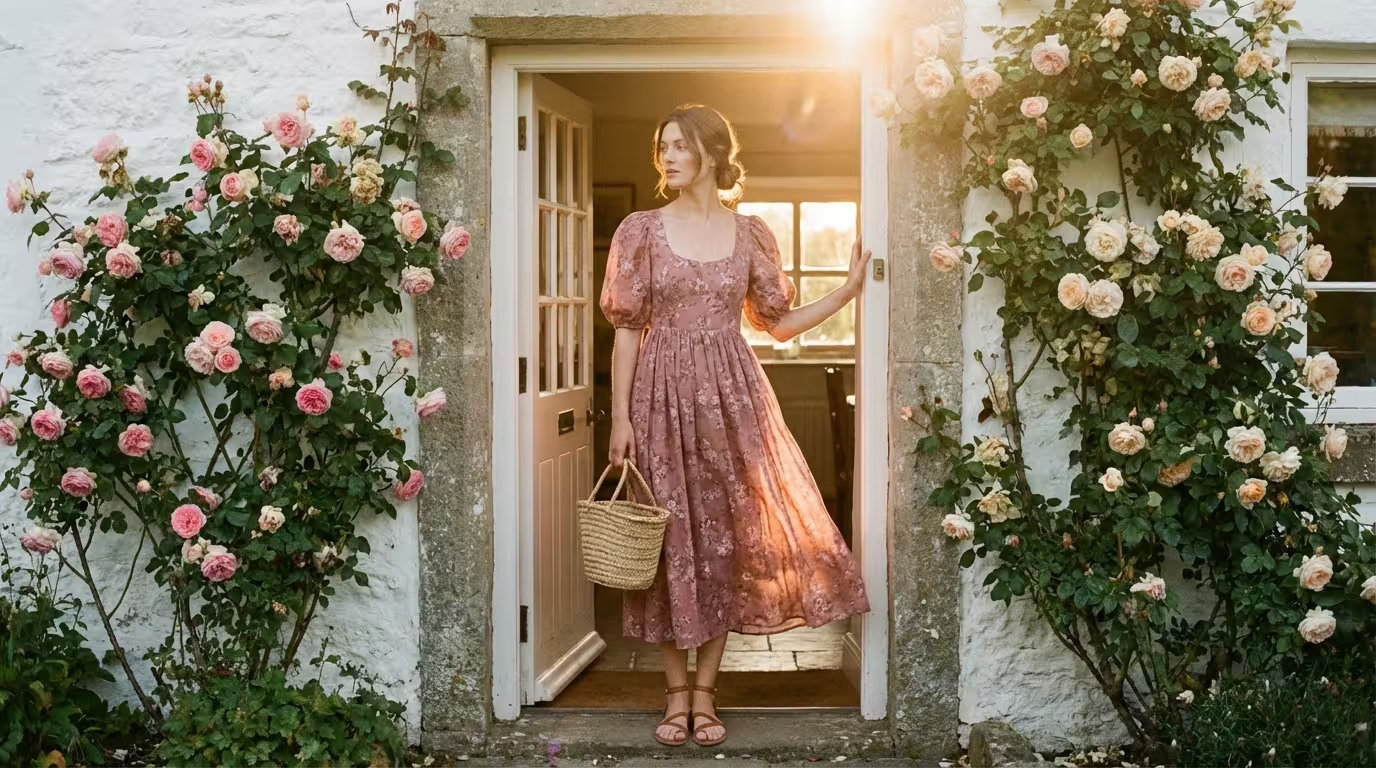
Modeste, féminine, intemporelle. L'esthétique de la « tradwife » ne consiste pas à suivre les tendances – il s'agit de s'habiller d'une manière qui reflète qui vous êtes : une femme qui valorise la beauté, l'intention et la grâce dans tout ce qu'elle fait.
Dans ce guide
- Qu'est-ce que l'esthétique tradwife ?
- Principes fondamentaux du style
- La palette de couleurs tradwife
- La garde-robe capsule "tradwife"
- 5 formules de tenue que vous pouvez copier
- Robes et pièces clés pour tradwife
- Trouver votre style de tradwife
- Où faire du shopping — tous les budgets
- Style par saison
- Foire aux questions
Qu'est-ce que l'esthétique de la tradwife ?
L'esthétique tradwife est une approche féminine, modeste et intentionnelle du style personnel qui reflète les valeurs de la mode de vie tradwife — la chaleur, la grâce, le sens du foyer et la beauté intemporelle plutôt que les tendances passagères de la mode.
Vous l'avez probablement déjà vu sans connaître son nom. Un TikTok d'une femme en robe fleurie sortant du pain du four. Une photo Instagram de quelqu'un en tablier de lin s'occupant d'un jardin à l'heure dorée. Une miniature YouTube d'une mère en cardigan crème lisant à haute voix à ses enfants près d'une fenêtre pluvieuse. C'est l'esthétique "tradwife" – et la raison pour laquelle elle vous fait vous arrêter sur votre fil d'actualité est qu'elle ressemble à la vie que vous aimeriez avoir.
Mais l'esthétique tradwife n'est pas un déguisement. A épouse au foyer Elle pourrait passer sa matinée à pétrir de la pâte, son après-midi à ramper sur le sol avec un tout-petit, et sa soirée à mettre le couvert pour un dîner aux chandelles. Ses vêtements doivent la suivre dans tout cela — assez confortables pour travailler, assez beaux pour se sentir en confiance, et assez solides pour survivre à la sauce spaghetti, à la terre du jardin et aux mains collantes d’un enfant de quatre ans. C’est la mode pour une vie qui est réellement vécue.
L'esthétique puise dans plusieurs inspirations — cottagecore, vintage des années 1950, prairie, classic Americana, simplicité scandinave, campagne européenne — mais elle n'en est enfermée dans aucune. Ce qui la relie, c'est l'intention qui la sous-tend : s'habiller d'une manière qui honore la féminité, respecte la pudeur et apporte de la beauté dans l'ordinaire. mouvement tradwife a donné un nom à cette esthétique. Le des femmes partageant cela en ligne lui a donné un langage visuel que des millions de personnes reconnaissent maintenant à vue.
Principes fondamentaux de la mode "tradwife"
Avant d'acheter la moindre pièce, comprenez la philosophie. Ces cinq principes vous éviteront un placard rempli de vêtements que vous ne portez jamais.
Modestie avec confiance
Modeste ne signifie pas guindé. Il ne signifie pas se cacher. Cela signifie choisir de laisser votre caractère guider plutôt que votre peau. Encolures plus hautes. Ourlets plus longs. Épaules couvertes. Non pas parce que quelqu'un vous l'a dit, mais parce que vous avez décidé que ce que vous offrez au monde va plus profondément que ce qu'une robe moulante peut montrer. Les femmes les plus magnétiques dans n'importe quelle pièce sont généralement les plus couvertes. Ce n'est pas une coïncidence.
La féminité comme fondement
Tissus doux. Silhouettes fluides. Couleurs douces. Le dressing "tradwife" célèbre tout ce qui rend la mode féminine belle — sans excuses. Robes, jupes, imprimés floraux, dentelle, tricots doux, détails de ruban. Il n'est pas nécessaire de justifier le port d'une robe pour faire du pain. Vous la portez parce qu'elle vous fait vous sentir comme la femme que vous avez choisi d'être.
Intemporel plutôt que tendance
La mode éphémère change toutes les six semaines. Le style tradwife change à peine en soixante ans. L'objectif : construire une garde-robe de pièces qui seront aussi belles dans dix ans qu'elles le sont aujourd'hui. Des coupes classiques. Des matières naturelles. Une palette de couleurs qui ne dépend pas de la nuance déclarée cette saison par Pantone. Quand vous voyez une photo de votre grand-mère dans une robe ajustée et des perles, et que vous pensez Elle est magnifique — c'est là l'objectif.
La fonction rencontre la beauté
A épouse au foyer La garde-robe doit fonctionner. Elle est Cuisine, nettoyage, Le jardinage, porter des enfants et se déplacer dans sa journée avec détermination. Chaque pièce doit être suffisamment confortable pour s'agenouiller en plantant des tomates et assez belle pour se sentir bien lorsqu'elle reçoit une voisine inopinée. Si une robe est magnifique mais que vous n'y respirez pas, elle ne devrait pas être dans votre garde-robe.
Moins, mais mieux
La qualité prime sur la quantité. Moins de pièces, chacune choisie avec intention. La garde-robe tradwife ne consiste pas à avoir beaucoup de vêtements — elle consiste à avoir les bons vêtements. Une capsule bien choisie de 25 pièces vous servira mieux qu'un placard rempli de 100 articles achetés sur un coup de tête et que vous ne portez jamais.
La Palette de Couleurs Tradwife
L'un des moyens les plus rapides de rendre votre garde-robe cohérente est de vous en tenir à une palette définie. Ce sont les couleurs qui définissent l'esthétique "tradwife" — et la raison pour laquelle tout s'assortit si facilement.
| Famille de couleurs | Nuances spécifiques | Quand les porter |
|---|---|---|
| Neutres chauds | Crème, avoine, ivoire, blanc chaud, beige | Votre couche de base — chemisiers, cardigans, tabliers. Va avec tout. L'épine dorsale de la garde-robe. |
| Tons terreux | Chameau, tan, cognac, chocolat, brun chaud | Ceintures, chaussures, sacs, jupes d'automne. Ancre n'importe quelle tenue sans concurrencer les couleurs plus douces. |
| Verts doux | Sauge, olive, mousse, eucalyptus | Robes, chemises en lin, tabliers. La couleur du jardin — naturelle, apaisante, universellement flatteuse. |
| Roses poussiéreux | Rose poussiéreux, rougissement, mauve, corail atténué | Robes, rubans pour les cheveux, pièces d'accent. Féminin sans être criard. Beau en toute saison. |
| Blues sourds | Bleu poussière, denim wash, chambray, ardoise | Robes, jupes de tous les jours. La couleur “cheval de bataille” — modeste, polyvalente, cache bien les taches. |
| Accents profonds | Bourgogne, vert forêt, marine, prune | Pièces automne/hiver, robes du dimanche. Riche sans être dur. Rehausse l'ensemble de la palette. |
La règle d'or : si vous pouvez l'imaginer poussant dans un jardin ou trônant sur une étagère de ferme, il a sa place dans la palette tradwife. Le néon, l'électrique et le noir dur sont absents - non pas parce qu'ils sont mauvais, mais parce que l'esthétique penche vers la chaleur, la douceur et le type de couleurs que l'on trouve dans la nature, et non sous des lampes fluorescentes.

L'armoire à capsules de Tradwife
Une garde-robe capsule se compose d'environ 25 pièces (sans compter les sous-vêtements, les vêtements de nuit et les vêtements d'extérieur) qui vont toutes ensemble. Pour une épouse au foyer, Ces pièces doivent vous accompagner des tâches ménagères du matin jusqu'au dîner du soir avec vos amis. mari — sans changement complet de garde-robe entre les deux.
3–4 robes d'été. La pierre angulaire. Une fleurie (la robe que vous portez tous les mardis sans réfléchir), une unie en crème ou en sauge (votre robe “toile blanche”), une vichy ou à carreaux pour l'automne, et une dans un ton plus riche - bordeaux, marine, vert forêt - pour les dimanches d'hiver et les rendez-vous nocturnes.
Jupes trapèze 2–3. Au-dessous du genou. Un modèle solide et neutre qui s'associe à tous les chemisiers que vous possédez, un modèle à fleurs ou à motifs, et un modèle en laine ou en velours côtelé pour les mois froids.
3–4 chemisiers. Simple, féminin, en coton ou en lin. Un blanc (non négociable - va avec tout), un crème, un dans une couleur douce. Cols claudine, dentelle subtile, détails pintuck. Rien de transparent. Rien que vous n'aimeriez porter pour aller ouvrir la porte.
2–3 cardigans. Un modèle léger en crème qui restera sur le dossier de votre chaise de cuisine neuf mois par an. Un tricot câblé en oatmeal ou en dusty rose pour les superpositions. Un pull-over pour les semaines les plus froides.
2 tabliers. Un coton robuste pour la cuisine de tous les jours (assez foncé pour survivre à la sauce tomate). Un tablier en lin ou un tablier croisé plus joli avec un imprimé doux - celui que vous n'enlèverez pas lorsque quelqu'un frappera à la porte. Les tabliers ne sont pas des accessoires. Ils font partie de l'uniforme.
Accessoires. Clous de perles ou petits anneaux en or. Un collier délicat que vous n'enlèverez jamais. Une ceinture en cuir cognac. Un ruban de soie pour les cheveux. Un sac panier en osier ou en paille pour les courses d'été.
Chaussures. Des mary janes ou des ballerines en cuir pour la vie quotidienne. Des bottines marron pour l'automne et l'hiver. Des sandales simples pour l'été. Et une paire de sabots de jardin qui vivent près de la porte arrière et ne rentrent jamais à l'intérieur.
5 formules de tenues de tradwife qui fonctionnent toujours
Vous n'avez pas besoin de réinventer votre tenue chaque matin. Ces cinq combinaisons fonctionnent pour presque tous les jours de la semaine. épouse au foyer semaine — et ils utilisent tous des pièces de la capsule ci-dessus.
| Occasion | La formule | Les détails |
|---|---|---|
| L'art ménager au quotidien | Robe midi unie + tablier en coton + ballerines | Votre robe sage ou crème, votre solide tablier sombre, vos cheveux en chignon bas. Confortable, bien mise, prête à tout, de la serpillière à la course à l'épicerie. Ajoutez le cardigan crème lorsqu'il fait frais. |
| Dimanche / Église | Robe ton sur ton + boucles d'oreilles en perles + bottines | Votre robe bordeaux ou marine, de simples clous de perles, des bottines marron, une ceinture en cuir à la taille. Pas de tablier. Les cheveux sont lâchés ou coiffés en demi-lune. Il s'agit de la même garde-robe, mais en version plus soignée. |
| Journée cuisine / pâtisserie | Robe à fleurs + tablier dos croisé + sabots | Ta robe midi à fleurs préférée (celle avec de la farine en permanence dans la poche), le tablier croisé en lin, les sabots de jardin, les manches retroussées. Fonctionnel et assez beau pour être photographié – même si cela n'a pas d'importance. |
| Soirée en amoureux avec mon mari | Chemisier + jupe trapèze + ballerines + collier | Chemise blanche en coton rentrée dans votre meilleure jupe trapèze. Collier délicat. Ballerines ou talons bas. Cheveux lâchés. Vous possédez déjà tout. Vous le portez simplement avec un peu plus d'intention. |
| Journée d'automne en plein air | Col roulé + jupe écossaise + bottes + manteau de laine | Col roulé crème rentré dans une jupe en laine à carreaux. Bottines marron. Manteau ou cardigan camel. Panier en osier pour le marché fermier. C'est la tenue qui est l'esthétique de la tradwife — chaleureuse, multicouche, d'une beauté sans effort. |
Remarque : chaque tenue utilise deux à quatre pièces de la même capsule. C'est la magie. Vingt-cinq pièces. Des dizaines de looks. Zéro matinée passée à fixer votre dressing à vous demander quoi porter.
Robes de Tradwife et Pièces Vestimentaires Clés
S'il y a une pièce qui définit l'esthétique “tradwife”, c'est la robe midi : longueur genou à cheville, modeste, féminine et d'une polyvalence infinie. Voici ce qui donne à un vêtement un air de "tradwife" et ce qu'il faut éviter.
| Pièce | Rechercher | Éviter |
|---|---|---|
| Vêtement de tous les jours | Coton ou lin, longueur midi, petites fleurs ou uni, boutons ou ceinture à nouer, poches si possible | Coupes moulantes, mini-longueurs, polyester, coupes hyper tendance qui seront démodées dans un an |
| Robe du dimanche | Tissu plus riche, imprimé plus subtil, taille marquée. Légèrement plus habillé que votre robe de mardi — mais toujours vous. | Tout ce qui est trop décontracté (robes t-shirt en jersey) ou trop révélatrice pour votre confort |
| Robe de travail | Votre pièce la plus pratique — coton résistant, couleur foncée ou imprimé qui pardonne les taches, qui bouge avec vous | Couleurs blanches ou pâles (une éclaboussure de sauce tomate et elles sont foutues), tissus raides qui empêchent de se pencher |
| Chemisier | Coton ou lin, encolure modeste, détails discrets (bordure en dentelle, smocks, col Peter Pan). Se rentre parfaitement dans les jupes. | Tissu voile, coupe courte, imprimés audacieux qui jurent avec les jupes à motifs |
| Cardigan | Maille fine ou torsadée en crème, avoine, sauge ou rose poudré. Assez long pour se superposer sur des robes. Fibres naturelles | Acrylique qui bouloche après un seul lavage, longueur courte, couleurs fluo |
| Tablier | Croisé dans le dos en lin ou tablier en coton. Motif uni ou floral discret. Poches profondes. Bretelles qui ne creusent pas après quatre heures | Motifs fantaisistes, tissu fin et bon marché, liens qui se défont à chaque fois que l'on se penche |
Trouver votre style de "tradwife"
L'esthétique tradwife n'est pas uniforme. Au sein de la communauté, plusieurs courants de style distincts ont émergé — chacun reflétant une version différente des mêmes valeurs. La plupart épouses traditionnelles mélangez des éléments de deux ou trois. Voyez lequel vous fait réfléchir C'est moi.
| Type de style | L'ambiance | Pièces signatures |
|---|---|---|
| Cottagecore | Énergie romantique, rurale, à base de prairies de fleurs sauvages. La campagne anglaise rencontre le rêve Pinterest | Robes à manches bouffantes, petits imprimés floraux, paniers en osier, chapeaux de paille, détails de col en dentelle, tresses nouées par des rubans |
| Classique vintage | Élégance des années 1940 aux années 1960. Raffiné, structuré, Grace Kelly au marché fermier | Robes évasées, bijoux en perles, cols Peter Pan, broches, escarpins à petits talons, rouge à lèvres rouge comme unique touche audacieuse. |
| Prairie modeste | Simplicité pionnière. Terrestre, ancré, à l'impression faite à la main. Laura Ingalls avec un meilleur tissu | Imprimés fleuris, longues jupes plissées, tabliers, bottes en cuir, couvre-chefs, détails faits à la main |
| Moderne minimal | Lignes épurées, palette discrète, le calme scandinave rencontre la chaleur traditionnelle | Robes en lin uni, cardigans déstructurés, tenues monochromes aux tons avoine ou sauge, bijoux simples en or |
| Domaine rustique | Fonctionnel, aventureux, conçu pour une vie où vous vous salissez vraiment les mains | Jupes en jean, superpositions en flanelle, bottes de travail, tabliers en toile, cheveux tressés, accessoires sans chichis |
Il n'y a pas de mauvaise réponse. Le Influenceuses tradwife Ce que les gens aiment le plus, ce ne sont pas ceux qui ont l'esthétique la plus soignée — ce sont ceux dont le style semble leur appartenir, pas comme s'ils l'avaient emprunté à un tableau d'inspiration.
Où acheter des tenues de "tradwife"
La question numéro un que toutes les femmes posent après avoir découvert l'esthétique "tradwife" : Où est-ce qu'on achète ce truc ? Voici la réponse honnête, organisée par budget.
Boutiques d'occasion et de seconde main — le meilleur endroit pour commencer
C'est là que la plupart des tradwives construisent la base de leur garde-robe, et ce pour de bonnes raisons. Les friperies regorgent de vrai coton, de vrai lin et de coupes classiques qui n'existent plus dans la fast fashion. Goodwill, Armée du Salut, magasins de consignation locaux, ventes de charité dans les églises - et en ligne : ThredUp, Poshmark et les sections vintage d'eBay. Certaines des tenues les plus appréciées de la communauté tradwife coûtent trois dollars dans une friperie. La frugalité fait partie de la valeurs.
Marques abordables qui comprennent
Tous les articles ne doivent pas être d'occasion. Ces marques proposent régulièrement des articles qui correspondent à l'esthétique tradwife à des prix abordables : Old Navy et Target pour les basiques unis et les robes simples. Amazon Essentials pour les cardigans et les superpositions. H&M Conscious pour les articles en lin. Shein (sélectivement - vérifiez la composition du tissu) pour les articles tendance et modestes. Uniqlo pour les essentiels minimalistes en lin et coton.
Marques de milieu de gamme pour des pièces d'investissement
Lorsque vous êtes prêt à investir dans des pièces que vous porterez pendant des années : Christy Dawn pour des robes durables de style champêtre. Doen pour des pièces romantiques et féminines en tissu véritable. Reformation pour des silhouettes modestes en matières naturelles. TOAST (UK) pour du lin et de la laine discrets. Pyne & Smith pour des robes en lin fabriquées à la main aux coupes intemporelles. Celles-ci coûtent plus cher mais durent — et le coût par port diminue rapidement lorsque vous optez pour la même robe trois fois par semaine.
Etsy et petits artisans
Etsy est une mine d'or pour la garde-robe tradwife. Cherchez “ robe mi-longue en lin ”, “ tablier cottagecore ”, “ chemisier style vintage ” ou “ robe prairie modeste ” et vous trouverez de petits artisans produisant exactement ce que le prêt-à-porter ne fait pas. Tabliers faits à la main, robes cousues à la main, tissus reproductions vintage. Prix plus élevé que le marché aux puces, mais vous soutenez une femme qui coud — souvent une épouse au foyer elle-même — et obtenir quelque chose que personne d'autre n'a.
Fais le tien
De nombreuses commerçantes cousent une partie ou la totalité de leurs vêtements. Des patrons simples pour des jupes trapues, des robes froncées et des tabliers sont à la portée des débutantes. Une machine à coudre de base, quelques mètres de coton ou de lin et un après-midi de week-end peuvent suffire à produire une robe qui coûte moins de dix dollars et qui vous va parfaitement parce que vous l'avez confectionnée vous-même. Vous pouvez commencer par Fabric.com, Joann et les magasins de tissus locaux. Apprendre à vos filles à coudre, c'est transmettre la tradition de la manière la plus littérale qui soit.

Style Tradwife par Saison
Printemps. La saison pour laquelle l'esthétique tradwife a été créée. Robes midi à fleurs avec un gilet crème jeté sur les épaules. Chemisiers en coton avec des jupes trapèze. Tabliers en lin sur tout. Ballerines ou sandales simples. Rubans dans les cheveux rose poudré. Ouvrez les fenêtres, cueillez les premières fleurs sauvages, et laissez la robe parler d'elle-même.
Été. Coton et lin respirants dans des tons plus clairs — crème, bleu doux, sauge. Manches courtes ou trois-quarts. Un chapeau de soleil à larges bords pour le jardinage. Votre tablier le plus léger. Sandales ou espadrilles. Tout est ample, tout est naturel, tout est conçu pour vous garder au frais pendant que vous poursuivez un tout-petit sous le jet d'eau.
Automne. C'est là que la garde-robe atteint son apogée. Jupes en laine à carreaux. Pulls en maille torsadée couleur avoine et camel. Velours côtelé dans des tons terreux chauds. Bottines qui crissent dans les feuilles. Un manteau camel ou olive. La superposition devient à la fois essentielle et belle. Si vous devez investir dans une garde-robe de saison, choisissez celle-ci.
Hiver. Robes en laine avec des collants épais. Longs cardigans par-dessus tout. Foulards, gants en tricot et bonnets en fibres naturelles. Bottes robustes pour les matins humides. Un manteau classique en laine bleu marine, camel ou anthracite. À l'intérieur : un beau châle drapé sur vos épaules pendant que vous lisez aux enfants au coin du feu. La maison sent la cannelle. Vous portez trois couches et vous n'avez jamais été aussi belle.
La clé pour toutes les saisons : habillez-vous pour votre vie réelle. Si vous êtes foyer toute la journée, privilégiez le confort. Si vous vous rendez à l'église, ajoutez une touche soignée. Si vous êtes Cuisine une fête, porte fièrement le tablier. L'esthétique de la tradwife fonctionne parce qu'elle est conçue pour la vraie vie — pas pour une séance photo.
Inspiration Mode Chaque Lundi
Idées de tenues, guides saisonniers et conseils pour la maison — pour la femme qui construit une belle vie chez elle.
FAQ sur l'esthétique Tradwife
Qu'est-ce que l'esthétique tradwife ?
Une approche de style féminine, modeste et intentionnelle qui reflète les valeurs du mode de vie tradwife — tissus naturels, couleurs douces, silhouettes classiques, et la beauté dans le quotidien.
Que portent les commerçantes ?
Robes midi, jupes trapèze, chemisiers en coton, cardigans, tabliers en lin et accessoires simples. Fibres naturelles, couleurs douces, et pièces à la fois belles et fonctionnelles pour foyer.
Où puis-je acheter des vêtements de tradwife ?
Les friperies pour les meilleures trouvailles avec un budget limité, Etsy pour les pièces faites à la main, et des marques comme Christy Dawn, Doen et Pyne & Smith pour les pièces d'investissement en tissus naturels. Voir le guide d'achat complet ci-dessus.
L'esthétique tradwife est-elle la même que la cottagecore ?
Elles se chevauchent — toutes deux célèbrent la beauté rurale, les matériaux naturels et le style féminin. Mais l'esthétique tradwife est ancrée dans un ensemble spécifique de valeurs à propos de la famille et d'un mode de vie intentionnel, tandis que le cottagecore est principalement une tendance visuelle. Une tradwife pourrait s'inspirer du cottagecore, des styles vintage, prairie ou minimalistes, selon ses goûts.
Dois-je m'habiller d'une certaine manière pour être une tradwife ?
Non. Il n'y a pas d'uniforme. Le épouse au foyer l'identité concerne les valeurs, pas les vêtements. Beaucoup de femmes au foyer traditionnelles aiment l'esthétique féminine, mais porter un jean un mardi ne vous rend pas moins traditionnelle. Habillez-vous comme vous le souhaitez pour vous sentir confiante, féminine et prête pour votre journée.
Quelles couleurs portent les tradwives ?
Crème, sauge, rose poudré, avoine, camel, cognac, bleu doux et tons terreux discrets. Accents profonds comme le bordeaux, le vert forêt et le marine pendant les mois les plus froids. Voir la palette de couleurs complète ci-dessus.
Quelles chaussures portent les tradwives ?
Ballerines en cuir, chaussures Mary Jane, sandales simples, bottines et sabots de jardin. Le confort est non négociable — u épouse au foyer passe la journée debout. Les meilleures chaussures sont celles qu'on oublie qu'on porte.
Puis-je m'habiller dans le style "tradwife" avec un budget limité ?
Absolument — et c'est le cas de la plupart des tradwives. Les friperies, les échanges de vêtements, la couture basique et une approche de garde-robe capsule signifient que vous pouvez vous habiller magnifiquement pour très peu. La frugalité n'est pas un obstacle à l'esthétique. Elle en fait partie.
Vous pourriez aussi aimer
Qu'est-ce qu'une tradwife ?
Le guide complet sur le style de vie qui se cache derrière le look
Influenceuses tradwife
Les femmes qui ont défini l'esthétique — suivez leur exemple
Règles de Tradwife
Le cadre quotidien derrière la garde-robe
Le mouvement Tradwife
Comment l'esthétique est devenue une identité mondiale
Livres de Tradwife
La lecture qui inspire la façon dont vous vous habillez et vivez
Partagez votre style avec des femmes qui comprennent
Postez votre tenue, votre trouvaille de friperie, votre projet de couture — et recevez de l'amour d'un Communauté de femmes qui croient que votre façon de vous habiller et votre façon de vivre racontent la même belle histoire.