
There are days when I get messages from readers asking me, «Is there really a difference between being a stay-at-home mom and a tradwife, or is it just a matter of names?» The truth is, this question comes up all the time, and it's totally valid. At first glance, both lifestyles seem to share the essentials-being at home, taking care of family, prioritizing the home-but when you dig deeper, you discover that the motivations, values and day-to-day approaches can be quite different.
This article was born out of precisely that shared curiosity. I'm not here to tell you which way is «better» (spoiler: none is universally so), but to help you understand the real nuances between being a stay-at-home mom and embracing the tradwife movement. If you're considering either of these styles, or just want to better understand where you fall on this spectrum, join me. We'll break this down with the honesty and warmth you deserve, exploring everything from definitions to the day-to-day experiences that make the difference.
What does it really mean to be a stay-at-home mom?
Let's start with the familiar. A stay-at-home mom (or SAHM, as it is commonly abbreviated) is a mother who chooses to stay home to care for her children rather than work outside the home on a paid basis. This decision often stems from practical motivations: the prohibitive costs of daycare in many U.S. cities, the desire to be present during the early years of life, or simply a personal preference to be the one who accompanies each milestone of child development.
What is interesting here is that the primary focus is on the active motherhood. A SAHM organizes her life around her children's needs: school schedules, extracurricular activities, medical appointments, after-school snacks. Think of those mornings where you prepare quick but nutritious breakfasts, juggle backpacks and lunchboxes, and then spend the day alternating between household chores and playtime or homework support. Honestly, it's a full-time job that often doesn't get the recognition it deserves.
Now here's the detail that is sometimes overlooked: being a SAHM does not necessarily imply following a traditional model of femininity or rigid gender roles. A stay-at-home mom can wear jeans and a t-shirt every day, use modern meal prep with her Instant Pot, maintain a freelance career from home, or split household chores evenly with her partner when she comes home from work. Look, I know SAHMs who take advantage of their children's school hours to running a successful online business or take online college courses. Flexibility is key-this role adapts to family circumstances without necessarily adhering to a broader life philosophy.
In addition, it is important to understand that many SAHMs view this stage as temporary. Perhaps they plan to return to the workforce when the children are older or more independent. That perspective influences how they approach day-to-day life-they might keep their professional skills up to date, network, or explore remote work options that allow them to eventually rejoin the corporate world. What is certain is that this view of stay-at-home motherhood as a phase (albeit a deeply valuable one) distinguishes many SAHMs from other, more permanent lifestyles.
The tradwife movement: more than staying at home
Well, now let's talk about the term that generates so much conversation: tradwife. The word is a contraction of «traditional wife,» and represents something deeper than simply being at home with the kids. It is a whole life philosophy that celebrates and reclaims traditional female roles as a conscious and empowered choice in the modern context.
A tradwife embraces the identity of guardian of the home in an integral and permanent way. It is not that the children are the sole focus (although they are obviously central), but that all family life is structured around traditional values: she as nurturer of the home, her husband as provider and leader, and the family as a fundamental unit that deserves complete devotion. Notice that this does not imply submission without judgment-modern tradwives are strong women who consciously choose this path because it resonates with their deepest values.
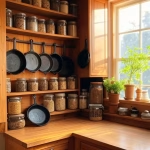
I'll confess something: when I first started exploring this community years ago, I was surprised to find the radical intentionality that characterizes this lifestyle. Tradwives don't just cook; they prepare meals from scratch as an expression of love and care-think sourdough fed weekly, bone broth simmered for hours, vegetables fermented in glass jars. They don't just clean; they create homemaking systems that turn home care into a refined art: seasonal cleaning routines, meticulous laundry systems, pantry organization that would make life easier for any large family.
That said, the tradwife movement also incorporates a particular aesthetic that goes beyond functionality. We're talking about that cottagegore atmosphere that floods Pinterest: midi dresses instead of yoga pants, vintage aprons with embroidered details, table set with real table linens even on ordinary Tuesdays. It's creating a homey sanctuary where every detail counts-from the fresh floral arrangements at the farmers market to the heirloom china you use on Sunday. That's right, it is not about unrealistic perfection, but to cultivate beauty and order as daily acts of love.
And you know what else defines this movement? The vision of the marriage as a complementary partnership. A tradwife sees her role as essential to family functioning-not inferior or superior to her husband's, but different and complementary. She manages the domestic realm (meals, household finances, children's education, family atmosphere) while he provides and protects. In addition, many tradwives prioritize keeping the marital spark alive: planned date nights at home, personal care that honors femininity, respectful communication that strengthens the bond. According to research on long-term marriages published in the American Psychological Association, The principles of stability, role clarity and mutual appreciation are key factors of stability-principles that tradwives intentionally apply.
Domestic intentionality
Tradwife homemaking goes beyond basic chores. Every aspect of the home is cared for with purpose: from meal planning systems that take the stress out of dinner parties, to deep cleaning routines that maintain a welcoming sanctuary. It's about seeing home care not as a tedious obligation, but as a vocation that creates the environment where the family flourishes. This includes skills such as seasonal canning, decorating that reflects family values, and creating traditions that are passed down generationally.
Cultivated femininity
Tradwives embrace femininity as strength, not weakness. This manifests in everyday details: choosing to dress in a way that makes you feel feminine and put together (even if no one else will see it that day), cultivating gentle strength in family communication, practicing genuine hospitality that makes every visitor feel special. It also involves intentional self-care-not for vanity, but because honoring your femininity is honoring the role you play. From skincare routines to moments of morning reflection with journaling, it's about nurturing the feminine energy that sustains the home.
Marriage Partnership
The tradwife marriage is based on clearly defined complementary roles, where both spouses honor and support each other's path. She is helpmate and guardian of the home; he is provider and protector. This does not mean hierarchy of value, but functional division that allows each to shine in his or her strength. Tradwives prioritize keeping romance alive: preparing special dinners even on Tuesdays, nurturing the atmosphere of the home so that it is a refuge for the husband as well, communicating respectfully even in disagreements. It is building a strong marital legacy that models healthy relationships for the children.
What are the similarities between the two paths?
Well, before we delve further into the differences, let's acknowledge the common ground-and believe me, it's substantial. Both lifestyles share a conscious rejection of the modern hustle culture that glorifies fast-paced careers at the expense of family life. Both a SAHM and a tradwife are saying, «My family deserves my full presence, and that has a value that no salary can buy.» In a society that constantly asks, «So what do you do?» (expecting a corporate answer), these women confidently respond, «I build a home.»
In addition, both prioritize the intentional motherhood. Whether you're preparing creative bento boxes for school lunch or homeschooling following a classic curriculum, the common denominator is presence. You're there for scraped knees and missing first teeth, for last-minute science projects and deep conversations before bedtime. According to data from the U.S. Census Bureau, In addition, approximately 27% of mothers with children under 15 years of age do not participate in the labor force, choosing to devote themselves entirely to the household-a number that has fluctuated but remains significant.
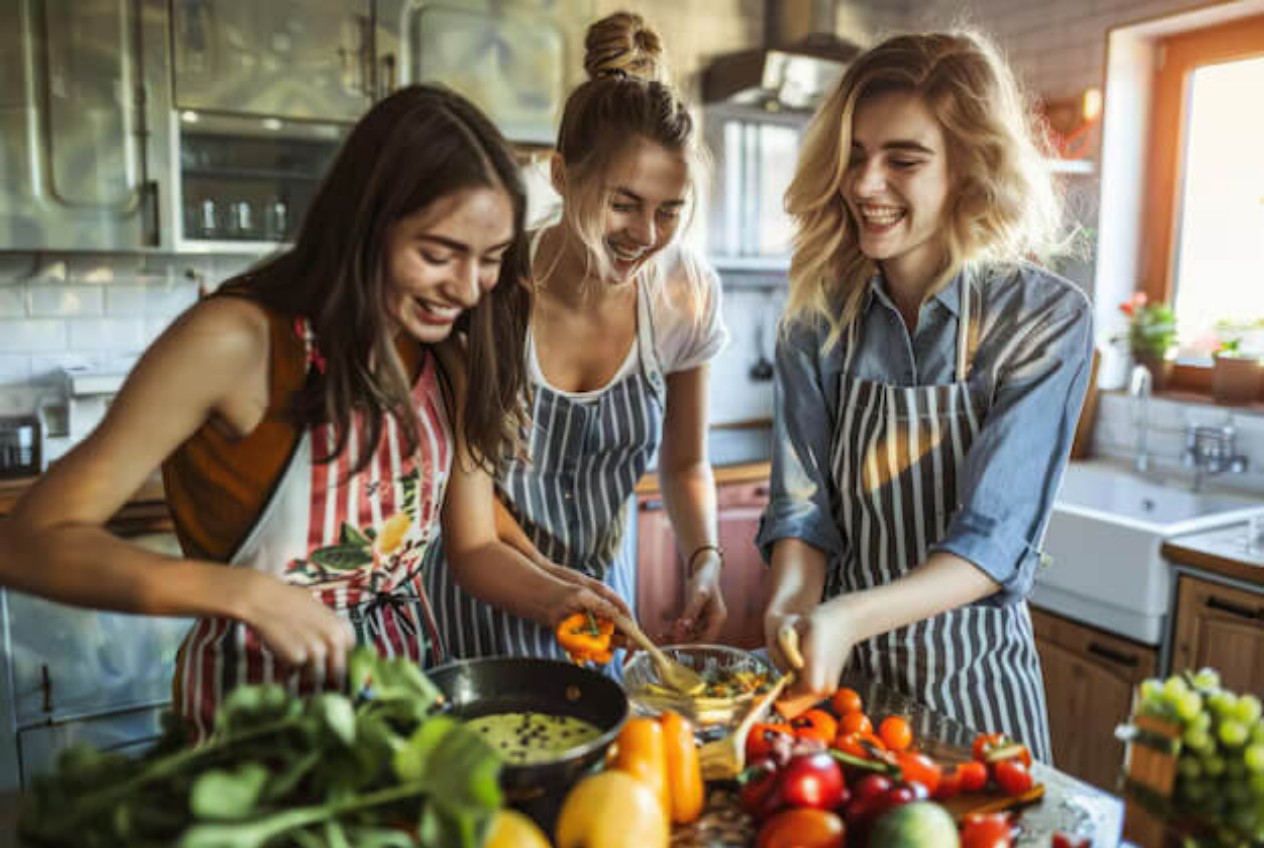
The truth is that both groups also value the practical household skills. Although the level of expertise varies, you'll find both SAHMs and tradwives perfecting family recipes, organizing efficient cleaning systems, managing family budgets with skill, and creating traditions their children will remember for a lifetime. Think of those autumn afternoons preparing pumpkin bread while the kids play with dry leaves in the yard, or lazy Sundays where the whole family collaborates on batch cooking for the week. These moments transcend labels-they are the essence of parenting with intention.
Yet, both communities face similar challenges. The loneliness that can arise when your friends are in offices while you spend long days at home. The social questioning («Aren't you bored?» or worse, «What do you do all day?»). The need to find authentic community with women who understand and value your choice. The invisible work that rarely receives recognition but sustains everything. That said, they also share the profound rewards: strengthened family bonds, the satisfaction of seeing your daily investment blossom into safe and loved children, and the peace that comes from living in alignment with your deepest values.
The fundamental differences that matter
Now, let's get to the heart of the matter. The differences between being a SAHM and a tradwife are not superficial-they touch on fundamental aspects of identity, values and life vision. Understanding them will help you clarify where you stand or where you want to move.
Motivation and underlying philosophy
A stay-at-home mom usually makes this decision by pragmatic reasonsThe motivation is practical and child-centered: unsustainable childcare costs, desire for direct supervision during formative years, or specific family circumstances (such as a child with special needs). The motivation is practical and child-centered. In contrast, a tradwife chooses this path because of philosophical conviction-believes that traditional gender roles, when embraced voluntarily, create family harmony and allow each person to flourish in their natural design. For her, it's not just about the children; it's about building a specific type of family life based on traditional values.
Permanence versus temporariness
See, here's a crucial distinction. Many SAHMs view their time at home as a valuable but finite stage. They plan to return to work when the children enter school, or when the youngest reaches a certain age. They keep their professional networks active, update certifications, or work part-time from home to maintain relevant skills. There is an expectation of eventual transition back into the workforce.
The tradwives, on the other hand, embrace homemaking as a lifelong vocation. They are not «pausing» a career-they have chosen the home as their career. Their identity is not tied to future career ambitions, but to continued mastery of the domestic art. This doesn't mean stagnation; it means constant deepening in skills like preserving, sewing, advanced homeschooling, or perfecting generational recipes. It is a lifelong commitment to a role they consider noble and complete in itself.
Focus on gender roles
A SAHM does not necessarily subscribe to traditional gender roles beyond staying home with the children. Her husband may cook regularly, do laundry on weekends, or take care of evening routines with the children. Important family decisions are made on a completely equal basis. She may wear pants and hoodies most of the time, maintain interests completely separate from motherhood and the home, and see her situation as a practical division of labor rather than an expression of essential femininity.
The tradwives, on the other hand, embrace complementary roles defined. She manages the domestic realm almost completely-cooking, cleaning, child rearing, household organization, family calendar management. He provides financially and makes family leadership decisions (with her valuable input, of course, but recognizing his role as head of the household). This extends to personal presentation: many tradwives prioritize dressing feminine even at home, seeing femininity as a strength to be cultivated, and rejecting the aesthetic androgyny of modern culture.
Depth of domestic skills
Let's be honest: a SAHM does what it takes to keep the house running while caring for small children (which is already a Herculean task). She can prepare nutritious meals using modern shortcuts-rotisserie chicken from Costco, pre-cut veggies, Instant Pot meals. Her house is reasonably clean and organized. It perfectly meets basic family needs without necessarily aspiring to artisanal levels of domesticity.
Tradwives tend to look for domestic expertise as an art form. This means: cooking from scratch as a norm (feeding sourdough, making homemade stock, grinding grains), traditional skills such as canning and preserving during harvest season, sewing to repair clothes or even make garments, advanced meal planning that includes batch cooking and strategic freezer meals, natural cleaning with homemade products, and gardening to supplement the family pantry. I confess this may sound intimidating (and it is at first!), but for tradwives it represents connection to ancestral traditions and family self-sufficiency.
Aesthetics and home atmosphere
The home of a SAHM is functional and welcoming, reflecting the needs of an active family. You might find toys organized in colorful bins, a family room designed for durability, practical decor that resists childhood chaos. It's warm and lived-in, with no particular aesthetic pretensions-the focus is on making it work for everyone.
A tradwife, however, cultivates intentional atmosphere. Her home aspires to be sanctuary: think cottagecore or farmhouse aesthetics-natural textiles, fresh flowers even on ordinary Mondays, candles lit at dinner, table set with care even if only the family eats. There is an aspiration for beauty that goes beyond functionality, believing that the home environment profoundly affects family well-being. Indeed, many tradwives practice seasonal tablescaping, changing decorations according to the liturgical calendar or natural seasons, and see homemaking as a legitimate creative expression.
How do you know which one resonates with you?
Well, we've come to the million-dollar question. If you're reading this, you're probably asking yourself, «Where do I fit into all of this?» Or maybe, «Where do I want to move?» And you know what-there's no universal right answer. What matters is honesty with yourself about your values, circumstances and aspirations.
Consider these thoughtful questions: Do you see your time at home as a valuable but temporary phase, or as a permanent vocation? Are you comfortable with traditional gender roles, or do you prefer complete flexibility in how your family divides responsibilities? Do you aspire to develop deep domestic skills (from scratch cooking, preserving, sewing), or do you prefer to use modern tools for efficiency? Does traditional femininity (dresses, aprons, cottagecore aesthetics) resonate with you, or do you feel more authentic in a more casual approach? Do you seek community that shares specific traditional values, or a broader network of stay-at-home moms regardless of philosophy?
Honestly, many women find that they fall somewhere on the spectrum between these two extremes. Maybe you're a SAHM who incorporates tradwife elements-say, you prioritize cooking from scratch and dress more feminine, but don't identify with the whole philosophical package. Or maybe you're tradwife in values but with circumstances that require flexibility-like working part-time from home out of financial necessity while maintaining your identity as a keeper of the home. The truth is that labels serve to clarify, not rigidly pigeonhole.
It is also worth mentioning that you can evolve over time. I know women who started out as pragmatic SAHMs and gradually discovered that the tradwife elements resonated deeply-they began baking homemade bread «just to try it out» and three years later are fermenting vegetables and sewing their own curtains. Others went in the opposite direction, finding that some traditional aspects were not sustainable or authentic to them. Still, both paths are valid; growth and adjustment are signs of self-knowledge, not failure.
Challenges unique to each path
Ultimately, no lifestyle is free of difficulties. Recognizing the challenges specific to each one helps you prepare and find coping strategies.
The stay-at-home moms often face: social isolation when friends work outside the home and don't understand the pace of home life, loss of professional identity-that awkward moment in meetings when they ask «What do you do?» and you fear your answer will be judged, financial anxiety when relying on a single income, especially if there are no robust savings or the spouse's employment is unstable, difficulty re-entering the workforce-gaps in the resume generate tough questions, and skills can become outdated, and burnout from the 24/7 nature of the job with no formal «days off» or outside recognition.
The tradwives encounter different obstacles: intense social judgment-the term «tradwife» has negative connotations in progressive media, and many face criticism of being «anti-feminist» or «submissive», pressure for perfection-the tradwife aesthetic on social media can create unrealistic standards that generate guilt when your reality includes unwashed dishes and kids in pajamas at noon, financial vulnerability-complete dependence on a husband's income can be frightening, especially with no career of your own to fall back on in the event of divorce or widowhood, risk of ideological isolation-if your social circle doesn't share your values, finding authentic community can be difficult, and physical exhaustion-maintaining high standards of homemaking while raising young children is physically and mentally exhausting.
I have to admit something: I've seen both brilliant SAHMs who flourish with pragmatic flexibility, and radiant tradwives who find deep purpose in their domestic vocation. I've also seen women on both paths struggling with loneliness, doubt and exhaustion. Whichever path you choose doesn't guarantee automatic happiness-what matters is the alignment between your internal values and your external life, and building support systems to sustain your choice.
Building your own path with intention
Here's the beauty: you don't have to conform perfectly to any one definition. Your family life is your canvas, and you can paint it with the colors that resonate with you. Maybe that means being a SAHM who incorporates specific elements you admire from the tradwife movement-say, you prioritize cooking from scratch because you value family nurturing and find the process meditative, but you completely reject the idea of rigid gender roles.
Or perhaps you fully identify as a tradwife in values but adapt the expression to your context-you keep remote part-time work out of financial necessity, but your core identity and priorities remain home and family. That said, what really matters is the intentionality-living consciously according to your chosen values, not by default or external pressure.
Some elements that can enrich whatever path you choose: genuine community-actively seek connection with women who respect your choice, whether in local churches, mom groups, or online communities, continuous learning-whether you're honing sourdough or upgrading professional skills, growth fuels purpose, healthy boundaries-learn to say no to commitments that don't serve your family, and communicate your boundaries clearly, real self-care-not the occasional spa day (although that's okay), but systems that prevent burnout: morning routines that center you, help when you need it, time for hobbies that nurture you, and grace for yourself-there will be days where everything goes wrong, where your vision and your reality don't match, where you question your choices. Those days do not invalidate your path; they are part of the humanity of the process.
And you know what else? Allow yourself to evolve. What works with little babies may not work with teenagers. What resonated at 25 may feel different at 35. Rigidity is the enemy of authenticity-give yourself permission to adjust your path as you grow in self-awareness.
Frequently asked questions about tradwives and stay-at-home moms
Absolutely. Technically, every tradwife is a stay-at-home mom if she has children, but not every SAHM is a tradwife. The difference is in the underlying philosophy. A woman can be at home with her children (SAHM) and simultaneously embrace traditional values of femininity and gender roles (tradwife). However, she can also stay at home for purely practical reasons without identifying with the tradwife philosophical component. Think of it as circles that overlap but are not identical.
Traditionally, the non-tradwife ideal is to devote oneself entirely to the home while the husband provides financially. However, in modern reality, some women who identify with tradwife values work from home (freelancing, blogging, selling handmade products) out of financial necessity, while keeping the home as a top priority. What distinguishes a tradwife is not the total absence of income, but that her core identity and primary focus remains on homemaking, not on external career ambitions.
Not necessarily, although there is a strong correlation. Many tradwives come to this lifestyle through religious convictions (especially conservative Christianity) that emphasize biblical gender roles. However, others embrace the tradwife lifestyle for secular reasons: rejection of modern feminism, attraction to traditional aesthetics, valuing gender complementarity without specific religious foundation. At the core of the tradwife movement are traditional values and gender roles, which may (but should not) be rooted in religious faith.
It is completely valid and common. Many SAHMs see this time as a valuable but not permanent stage. The transition back into the job market can present challenges (resume gaps, outdated skills, diminished confidence), but also unique strengths (time management, multitasking, problem solving, patience). Helpful strategies include: maintaining active networking during the home years, volunteering or freelancing to maintain relevant skills, taking online courses to update knowledge, and preparing a resume that highlights transferable skills developed in homemaking.
It depends on how you define feminism. If feminism means «the right of women to choose their own path,» then tradwives are profoundly feminist-they exercise conscious choice over their lives. If feminism implies rejection of traditional gender roles and pursuit of perfect equality in all areas, then yes, the tradwife movement is opposed to that specific version. Most tradwives would argue that their choice is empowering and legitimate, rejecting the notion that only corporate careers represent female value. It is a complex debate where definitions matter enormously.
At the end of the day, the question is not «Which is better, SAHM or tradwife?» but «Which resonates with my personal truth?» Both paths honor home and family in different but equally valuable ways. Whether you find yourself preparing overnight oats for breakfast while planning your eventual return to the job market, or feeding your sourdough while embroidering napkins for Thanksgiving, what matters is that your choice empowers you and reflects your deepest values. Don't let anyone-not critical external voices or internal pressure for perfection-rob you of the peace of knowing that you are living your life with intention. Your home, your family, your path-they are yours to create with the wisdom and strength you already possess. Keep exploring, growing and honoring your chosen vocation, whatever it may be called.



 English
  Spanish
  Portuguese